Lesson 05 · 90 minutes · 14 parts
Brand
A brand lives in the customer’s mind; branding is a craft: seven elements, archetypes, visual identity, the brand manual and portal, architecture, equity by Interbrand and Kantar, and how Nike, Jaguar, and X lost value.
This lesson has no English narration yet. The Czech version is narrated.
What you will take away
- -You can tell brand, branding, and identity apart and know which of them you control.
- -You can describe a brand through its seven elements and give it an archetype, a persona, and a tone of voice.
- -You know what belongs in a brand manual, where to keep it, and what a trademark costs.
- -You understand brand architecture, positioning, and brand equity, and can read the Interbrand and Kantar rankings.
- -Using Nike, Jaguar, and X as examples, you can recognize how brand value gets lost and how to prevent it.
Lesson plan
- 5 minIntroduction and a question for the class · What do you think a brand is? Three brands you’d pay extra for, and why.
- 5 minStudent presentation · Pick a brand you pay extra for and show three things that let you recognize it even without the logo.
- 10 minWhat a brand is and where it came from · From a burned-in mark to LA28; brand vs. branding vs. identity.
- 14 minWhat a brand is made of · Seven elements, story, personality, archetypes, values.
- 12 minIdentity and where to keep it · Visual identity, brand manual, portals, trademarks, AI.
- 10 minExercise: archetype and tone · Pairs pick a brand, name its archetype, and write three sentences in its tone of voice.
- 10 minArchitecture, positioning, equity · Branded house vs. house of brands, the 60:40 split, brand value rankings.
- 15 minWhen a brand gets lost · Nike according to Giunco, Jaguar, X, Tropicana; what it all means.
- 9 minPersonal brand, wrap-up, and quiz · Ten naming criteria, three words from a client, five questions.
Contents
- 1A brand is not a logo
- 2Where brands came from
- 3Brand, branding, identity
- 4Seven elements of a brand
- 5A story that can be retold
- 6Personality, archetypes, values
- 7Visual identity
- 8Where to keep it all
- 9Brand architecture
- 10Positioning and brand strategy
- 11Brand equity: what a name is worth
- 12The Nike story: how value gets lost
- 13When a rebrand fails
- 14Personal brand and checklist
1A brand is not a logo
A brand is not a logo
- ·A brand lives in the customer’s mind, not in a logo file
- ·The same cola tastes different when you know what you’re drinking (McClure, 2004)
- ·The world’s 100 most valuable brands: $13.1 trillion (Kantar BrandZ 2026)
- ·Question: what do you think a brand is? Name three you’d pay extra for
Ask people what a brand is, and most will say the logo. But a logo is just a signature. A brand is what comes to mind when someone hears your name: experiences, feelings, stories, expectations. It lives in the customer’s mind, not in the logo folder. You don’t own it; you only influence it. That’s why a brand can be destroyed in a week and takes ten years to build.
The best proof comes from the cola experiment. In 2004, Samuel McClure and colleagues had people drink Coca-Cola and Pepsi inside an MRI scanner. When they didn’t know what they were drinking, taste decided, and the brain’s reward center responded. When they saw a Coca-Cola can, their preference shifted “dramatically” toward it, according to the authors, and areas linked to memory and culture became involved. Same liquid, different experience. That’s a brand: information that changes how something tastes. The study was published in the journal Neuron.
Money shows this isn’t cosmetics. Kantar BrandZ 2026 valued the world’s hundred most valuable brands at a combined $13.1 trillion (+22% year over year), and Google alone at $1.5 trillion. For scale: the gross domestic product of the entire Czech Republic was roughly $390 billion in 2025 (World Bank), so according to Kantar, the Google brand alone is worth almost four times the Czech economy’s annual output. It’s an estimate based on one methodology, but the order of magnitude holds.
Today’s plan: from a burned-in mark to LA28, what a brand is made of, where to keep it, and what happens when a company loses it. We finish with a checklist for your own brand.
- $1.5 tn
- Google, the world’s most valuable brand in 2026
- $13.1 tn
- the world’s 100 most valuable brands, +22% in a year
- ≈ 4×
- Google brand value vs. Czech annual GDP (estimate)
Kantar BrandZ 2026
Kantar BrandZ 2026
Kantar BrandZ 2026 / World Bank
For discussion
What do you think a brand is? Name three brands you’re willing to pay extra for, and say why.
Rabbit holes
- Kantar BrandZ Most Valuable Global Brands ↗ · The current ranking with values and methodology.
- McClure et al.: Neural correlates of behavioral preference for culturally familiar drinks ↗ · Abstract of the cola study in the MRI scanner.
2Where brands came from
From a burned-in mark to a dynamic logo
- ·brand = Old English for fire, torch; a mark burned into cattle
- ·January 1, 1876: Bass, trademark No. 1 in the United Kingdom
- ·2020: LA28, a fixed frame and 26 versions of the letter A (50 by 2024)
- ·The brand moved from the product into culture and code
The word brand comes from the Old English brand: fire, flame, torch. A mark burned into cattle told you whose cow it was. So the first meaning of a brand is ownership and origin: this is mine, I vouch for this. Guilds, breweries, and winemakers added a guarantee of quality. When goods began to be sold in packages far from the producer in the 19th century, they needed a name people could trust from a distance.
The law caught up in 1875: the British Trade Marks Registration Act allowed marks to be registered, and at midnight on New Year’s Day 1876, the red triangle of the Bass brewery became trademark No. 1. It’s still on the register today, 150 years later. Yet the triangle was on the bottles long before the law; the state simply recognized what the market was already using.
The 20th century turned the brand into a tool of the mass market: advertising, television, agencies. In 1971, Nike bought its swoosh from a student, Carolyn Davidson, for $35 (17.5 hours of work); twelve years later, the company gave her 500 shares as well. Since the 1980s, people have talked about brands as assets with a price tag, known as brand equity, and the Interbrand and Kantar rankings measure it. In 2004, Kevin Roberts of Saatchi & Saatchi added the term lovemarks: brands that earn not just respect but love.
Today the brand lives in code and in culture. The LA28 Olympic emblem from September 1, 2020, has a fixed L, 2, and 8, but the letter A changes: at launch, 26 creators, athletes, artists, and activists from Allyson Felix to Billie Eilish, each designed their own version. By August 2024, LA28 had announced its fiftieth custom design; among them is Vanessa Bryant’s A in memory of Kobe. A brand is no longer a single file; it’s a system of rules that can handle a thousand variations and stay recognizable. That’s exactly what we’ll ask of your brand.
- 1876
- Bass: trademark No. 1 in the United Kingdom, still valid today
- 26
- creators designed their own A for the LA28 emblem at launch (September 2020)
- 50
- custom versions of the letter A by August 2024
UK IPO
Time Out / IPC
LA28
Rabbit holes
- UK IPO: The red triangle that made history ↗ · 150 years of trademark No. 1, with images from the register.
- LA28 unveils its emblem (IPC) ↗ · The dynamic A and the names of the creators behind the first versions.
- Time Out: 35 logos for LA28 ↗ · All the versions from September 2020, 26 of them by named creators.
- Wiktionary: brand ↗ · The etymology, from fire to a burned-in mark.
3Brand, branding, identity
Brand, branding, identity: three words, three layers
- ·Brand: the result in the audience’s mind (experiences, feelings, associations)
- ·Branding: the activity that shapes that image (campaigns, stories, experiences)
- ·Identity: the tools you control (logo, colors, typeface, tone, sound)
- ·Control: identity 100%, branding a lot, the brand only partly
Three terms that get mixed up, yet they divide the work in a team. Brand is the result: the sum of experiences, feelings, and associations in the audience’s mind, built up over time. Branding is the activity: the campaigns, stories, communication, and experiences you use to shape that image and stand out. Brand identity is the set of tools you fully control and use on purpose: logo, colors, typeface, tone of voice, sound, packaging.
The practical consequence: you have one hundred percent influence over identity, a lot over branding, and only partial influence over the brand. The customer adds a late package, an unpleasant woman on the hotline, and a post you didn’t write. That’s why you can’t “make” a brand in a design studio. The studio delivers the identity; the brand is made by operations, the product, and people every day.
You can buy an identity in a week, branding takes years, and a brand is measured in decades. That sets the order of investment: first the product and the promise, then consistent behavior, and only then advertising. Companies that reverse it (new logo, big campaign, same product) pay twice: for the campaign and for the disappointment.
4Seven elements of a brand
What a brand is made of: seven elements
- ·Visual identity, personality, story, communication style
- ·Name, sensory identity (sound, scent, touch), product or service
- ·The product is the one element without which the rest collapse
- ·Test: Red Bull, Alza (Czech online retailer), Kofola (Czech cola). Which of the seven is missing?
You can break a brand down into seven elements. Most people see only the first one, visual identity. Yet the seventh, the product or service, is the only one without which everything else collapses: a promise without delivery is the marketing of lies. The elements are not a checklist to tick off but a system; a weakness in one undermines the others.
- -Visual identity: consistent visuals across every touchpoint, from the website to print materials and packaging.
- -Brand personality: the human traits the audience attributes to it (friendly, expert, rebellious).
- -Brand story: a narrative about the brand’s purpose and life that explains why it exists.
- -Communication style: the same tone and voice in advertising, on the hotline, and in internal email.
- -Name: a unique identifier; memorable, pronounceable, protectable.
- -Sensory identity: a sonic logo, a scent in the store, the feel of the packaging; everything beyond sight.
- -Product or service: what actually delivers on the promise.
5A story that can be retold
A story you can retell in 30 seconds
- ·Why, when, where, and how the brand started; who founded it
- ·Turning points, cultural context, stories people keep telling
- ·Purpose: why it exists beyond profit
- ·Test: true, verifiable, retellable in 30 seconds
A brand story is not the company history on the About Us page. It’s a narrative that explains to the audience why the brand exists and why they should care about it. A good story includes: why, when, where, and how the brand started; a concise profile of the founders; key events and turning points; cultural and historical context; entertaining and inspiring stories from its years of existence; and a purpose that goes beyond profit. The test: can it be retold in an elevator in thirty seconds, and will a stranger remember it?
The story has to be true and verifiable. The internet has a memory (the Wayback Machine), and fans love to look for holes; an invented founder or an embellished founding date will come back as a joke. And the story doesn’t have to be big: a local brewery that brews with water from its own well has a stronger story than a corporation with a “passion for quality.” The more concrete the detail, the better it sticks: you remember the $35 swoosh, not “strategic investments in the brand.”
The story is also the cheapest content you have: podcast, onboarding, trade fair, packaging. The media need it more than a press release (Media), and an event is a story played out live (Events).
6Personality, archetypes, values
Brand personality: if it were a person
- ·Aaker (1997): sincerity, excitement, competence, sophistication, ruggedness
- ·12 archetypes (Mark and Pearson, 2001): Hero, Sage, Rebel, Caregiver…
- ·DHL: innovative, optimistic, responsible; tone bright, focused, energetic
- ·Values = rules for the people inside, not a slogan for the website
Brand personality is the set of human traits the audience attributes to a brand: the sum of its emotional, psychological, and behavioral patterns. It’s a shortcut; people don’t have time to read the manual, so they picture the brand as a person and treat it accordingly. In 1997, in the Journal of Marketing Research, Jennifer Aaker put together a validated scale of five dimensions: sincerity, excitement, competence, sophistication, and ruggedness. Volvo scores on competence, Red Bull on excitement, Jeep on ruggedness.
Archetypes offer a more practical language. In their book The Hero and the Outlaw (2001), Margaret Mark and Carol Pearson applied twelve Jungian archetypes to brands: Innocent, Explorer, Sage, Hero, Rebel, Magician, Everyman, Lover, Jester, Caregiver, Creator, Ruler. An archetype is not a target group; it’s the role the brand plays in the customer’s story. Nike is the Hero, Harley-Davidson the Rebel, Volvo the Caregiver. Most brands have a primary and a secondary archetype; a brand with five has none.
What it looks like on paper: in its brand hub, DHL describes the brand with three pairs of traits (innovative and skillful, optimistic and courageous, responsible and empathetic) and three tonalities: bright, focused, energetic. That tells you how to write a newsletter and how to photograph a courier. Another route is a persona in one paragraph, for example: “One foot in the city, the other in nature. She wears heels. She’s no eco-terrorist. Healthily confident, with a touch of glamour. She can laugh at herself, and there’s never a dull moment with her.” Five sentences, and the copywriter, the photographer, and the recruiter all know whom to look for.
Brand values are simple guiding principles for the people inside the organization, which they use to decide when the manual is silent. They belong in the brand guidelines, not on a billboard. The test of a value: can you turn down a job or let someone go because of it? If not, it’s a wish, not a value. Why personality works is explained in the Psychology chapter: fast thinking needs shortcuts, and an archetype is a shortcut the brain has known since childhood.

For discussion
What archetype do Slavia Prague, Česká spořitelna (a major Czech bank), and Alza have? Can you agree in pairs on the primary and the secondary one?
Rabbit holes
- Aaker: Dimensions of Brand Personality (PDF) ↗ · The original five-dimension scale.
- 14islands: The power of brand archetypes ↗ · The twelve archetypes and how the studio uses them in a workshop with a client (cards).
7Visual identity
Visual identity: what you recognize from two meters away
- ·Palette, logo, typeface, imagery, layout, packaging: six elements, one system
- ·A color can be registered: Deutsche Telekom enforces magenta worldwide
- ·Nike logo: $35 (1971); BP rebrand: around $211 million (2000, estimate)
- ·Škoda 2022: flat badge, new wordmark with a háček, two greens, on cars from 2024
Visual identity is the combination of graphic elements that let you recognize a brand even before you have time to read its name. Six elements: color palette, logo, typefaces, imagery and photography style, graphic layouts, and product or packaging design. The goal is not beauty but recognizability: in How Brands Grow, Byron Sharp calls these distinctive assets, the striking elements people associate only with you.
Colors carry emotion, but above all ownership. According to color psychology, each color has its own meaning (red for energy, blue for trust, green for nature), but in a category where everyone is blue, the orange one wins. A color can even be registered as a trademark: Deutsche Telekom has magenta registered and enforces it worldwide. Because of it, the insurer Lemonade had to withdraw its pink in Germany in 2019, but it won in France in December 2020, because Telekom wasn’t actually using the trademark for financial services (Techdirt). Specify the exact shade in your manual in Pantone, CMYK, RGB, and HEX, or you’ll end up with four different reds.
A logo has to work at 16 pixels as a favicon and on a 10-meter banner, on white, on black, and in a single color. The price of a logo says nothing about its value: Nike paid $35 for the swoosh, while BP’s rebrand with the Helios sun in 2000 cost around $211 million, according to an often-cited estimate (DesignRush); most of that went into replacing the signage at gas stations and on vehicles. A logo’s value comes from 50 years of consistent use, not from the drawing. A typeface must support Czech diacritics and be licensed for both web and print; choosing and pairing typefaces is covered in the Production chapter.
What evolution instead of revolution looks like: on August 30, 2022, Škoda Auto introduced a new identity, its biggest change in 30 years. A flat 2D badge instead of a chrome 3D one, a new wordmark with the háček (the Czech accent mark) tucked into the letter S, two greens (Emerald and Electric Green), and a gradual rollout onto cars from 2024. The logo didn’t disappear; it just adapted to screens, where the brand lives most today. Customers didn’t have to relearn anything.
- $35
- the Nike swoosh, 1971; today one of the world’s most valuable logos
- $211 m
- BP rebrand in 2000, including the rollout to stations and vehicles (estimate)
- Aug 30, 2022
- Škoda: flat badge, new wordmark, two greens
The Fashion Law
Fast Company / DesignRush
Škoda Storyboard
Rabbit holes
- Škoda Auto: new logo, colors, and identity (2022) ↗ · Press release with images of the badge and wordmark (in Czech).
- Pinsent Masons: Deutsche Telekom claims to own the colour magenta ↗ · A historical example from 2001: Telekom sends a warning letter over magenta on someone else’s website.
- Midjourney: Style Reference ↗ · Documentation for --sref and --sw.
- The Fashion Law: Nike and its logos ↗ · The $35 swoosh, the 500 shares, and the trademark.
8Where to keep it all
An identity without a single home falls apart in six months
- ·Brand manual: logo, colors, fonts, tone, templates, what’s off-limits
- ·One source of truth: a portal (DHL Brand Hub, HOPI Brands Guide), not an email attachment
- ·Tools: Figma from $16/month, Canva Pro CZK 2,400/year, DAM on request
- ·Trademark: ÚPV CZK 5,000 for up to 3 classes, EUIPO €850 for one class
An identity without a place where everyone can find it falls apart in six months: a salesperson copies the logo from an email signature, the agency uses an old template, a designer “improves” the red. A brand manual, or brand guidelines, is a document that says what, how, and above all how not. The best manuals are public: DHL has its entire Brand Hub online, and Mailchimp published its Content Style Guide under a Creative Commons license, including the Voice and Tone and Writing for Accessibility chapters, so that anyone can adopt it. Czech examples to open (both in Czech): the gov.cz Design System, with a unified visual style for the state administration and components for government websites, and the City of Brno manual, with a downloadable logo and clear space rules.
Where it physically lives: a small company can get by with a shared drive with a clear structure (01 Logo, 02 Colors and Fonts, 03 Templates, 04 Photos) and one PDF. A mid-sized company needs Figma as the source of truth for design (Professional from $16 per full seat a month) and Canva or Adobe Express with a brand kit for people who aren’t designers; Canva Pro costs CZK 2,400 a year in the Czech Republic and $144 in the dollar price list (Canva sets prices by country; both price lists as of October 2026). A large company buys a DAM (digital asset management: Bynder, Frontify, Brandfolder) with rights, versions, and licenses attached to every file; pricing is on request, an estimated several hundred euros a month and up. The cheapest and most durable option is your own brand portal on your own domain: a static website with no licenses and no logins.
What to protect legally: register your name and logo as a trademark. A national trademark at the Czech Industrial Property Office (ÚPV) costs CZK 5,000 for an application covering three classes of goods and services (CZK 500 for each additional class) and is valid for 10 years. A European Union trade mark at EUIPO costs €850 for one class (+€50 for the second, +€150 for each additional one) and protects you in 27 countries. Before choosing a name, search the ÚPV and EUIPO registers and check whether the domain and social media accounts are available; a surprise after the business cards are printed is the most expensive version.
- -Logo: variants, clear space, minimum size, what’s off-limits (distortion, shadows, colors outside the palette)
- -Colors: primary and secondary palette in Pantone, CMYK, RGB, and HEX, usage ratios
- -Fonts: names, weights, licenses, fallback fonts for Office and the web
- -Imagery: photography style, illustrations, icons, examples of do’s and don’ts
- -Tone of voice: three adjectives, sample sentences, a vocabulary (what we say and what we don’t)
- -Templates: presentation, email signature, social media post, document, business card
- -Contact: who approves exceptions and where the source files are
- CZK 5,000
- national trademark for up to 3 classes (ÚPV), valid for 10 years
- €850
- EU trade mark for one class, 27 countries
- CZK 2,400
- Canva Pro for one person for a year in the Czech Republic (dollar price list: $144)
portal.gov.cz
EUIPO
Canva
Rabbit holes
- HOPI Brands Guide ↗ · HOPI’s brand portal: 14 brands and an llms.txt file for AI.
- DHL Brand Hub ↗ · A model corporate brand hub.
- Mailchimp Content Style Guide ↗ · A public tone-of-voice manual.
- Registering a trademark (portal.gov.cz) ↗ · The official ÚPV procedure and fees (in Czech).
9Brand architecture
Architecture: how many brands and how they relate
- ·Branded house: one brand for everything (Google, FedEx, Virgin)
- ·Endorsed: the parent brand vouches for its sub-brands (Courtyard by Marriott)
- ·House of brands: independent brands under one owner (P&G)
- ·Most companies have a mix; what matters is the transfer of trust and of risk
- ·Czech Republic 2025: Voyo and O2 TV → Oneplay, Mall.cz and CZC.cz → Allegro
Brand architecture is how a company organizes the brands in its portfolio and how it presents them to the customer. Three pure models: the branded house (monolithic: one name on everything; Google, FedEx Express and FedEx Ground, Virgin Atlantic and Virgin Active), the endorsed model (the parent brand supports its sub-brands: Courtyard by Marriott, KitKat with the Nestlé logo), and the house of brands (independent brands under one owner: Procter & Gamble with Gillette, Old Spice, and Tide; customers often don’t even know they’re connected).
What decides it: the transfer of trust and the transfer of risk. A single brand saves money (every campaign builds the same thing) and speeds up the launch of a new product, but a scandal in one division hits them all. Separate brands cost many times more, but they let you sell a premium and a budget product side by side without cannibalization, and sell off a division without the customer noticing. Endorsed is a compromise: “by Marriott” under the name adds trust, while the brand’s own name allows a different character and a different price.
In reality, most companies have a mix and change it over time; in 2015, Google put itself under the Alphabet holding company so that experiments wouldn’t damage the main brand. The rule for small companies: until you have a reason for a second name (a different customer, a different price, a different risk), stick with one. Every new brand means a new awareness budget starting from zero, and in the Czech Republic, with 10.9 million people, awareness takes a long time to build.
Fresh Czech cases show how architecture changes. The PPF group owns both Nova, with its streaming service Voyo, and the operator O2, with its O2 TV. Instead of two brands it wanted one, and it took neither of the old ones: on February 25, 2025, Nova and O2 announced the end of Voyo and O2 TV, and from March 10, Oneplay replaced them in the Czech Republic. Nova CEO Daniel Grunt explained it in an interview with e15 like this: they were combining pure streaming with classic IPTV, they wanted a new category of service rather than an improved old product, and pay TV in the Czech Republic, he said, had been stagnating for three years. A change that big should be underlined by a new brand. The name was picked from hundreds of proposals and had to be simple and easy to pronounce; Voyo couldn’t be used, and one of the other options ran into a trademark. The campaign by the agency VML then carried faces from the old services over to the new name: Oskar Hes as the King of Šumava from a Voyo series, and Petr Čech for sports from O2 TV. Voyo users moved over at once and their app renamed itself; O2 TV customers moved gradually until the end of June 2025.
The result after two months: about 1.4 million subscribers according to PPF, several hundred thousand fewer than the two services had combined. Before the merger, Voyo reported 950,000 subscribers in the Czech Republic and Slovakia, and O2 TV almost a million. The transfer of O2 TV customers was still under way at the time, and part of the gap is people who paid for both services and kept one; according to Grunt, Nova underestimated their number at first. Criticism came right away. Juraj Koiš of the TV Kompas website wrote in an analysis that scrapping two brands that had absorbed up to billions of Czech crowns makes no sense at first glance. On day one, more than half a million people logged in to Oneplay, and the service was down for about two hours. The consumer organization dTest pointed out that transferred customers could not easily reject the change or cancel their contract. After nine months, Grunt said the brand had reached Voyo’s level and, in terms of which service people think of first, was a close second behind Netflix. But by his estimate, Nova will spend about two more years explaining what Oneplay actually is.
The Polish marketplace Allegro is going the opposite way, from several names to one. At the turn of 2021 and 2022, it bought the online stores Mall.cz and CZC.cz along with the delivery company WeDo. WeDo first ran as an endorsed brand, WeDo by Allegro, and in the summer of 2024 began switching to One by Allegro so that it carries the same name in every market. CZC.cz ended as a standalone online store in the fall of 2024, and Mall.cz on March 31, 2025; both now sell as stores on Allegro. Allegro cites shared software and technology costs. A house of brands thus becomes a branded house, and the awareness of the old names either carries over or gets lost. Entrepreneur Zdeněk Michálek, who once built the first major online store of CZC’s predecessor, told Seznam Zprávy that Alza benefits the most. Allegro, for its part, says its number of active buyers outside Poland doubled in a year to 3.3 million.
- -Merging into a new brand: two brands are replaced by a third when the new service differs from both originals; that is how Oneplay came out of Voyo and O2 TV.
- -Absorption: the acquired brand disappears into the parent, and the portfolio becomes a branded house; that is how Mall.cz and CZC.cz ended up inside Allegro.
- -Endorsed as an interim step: the new name is first attached to the old one as an endorsement and only later replaces it; WeDo by Allegro became One by Allegro.
- -Brand equity transfer: familiar faces in the campaign, the same login, and redirects, so customers take their trust in the old name with them.
- 1.4 million
- Oneplay subscribers two months after launch, fewer than Voyo and O2 TV combined
- 500,000+
- people logged in to Oneplay on day one; then the service was down for about two hours
- Mar 31, 2025
- end of Mall.cz as a standalone store, the next one absorbed by Allegro after CZC.cz
PPF / MediaGuru
Lupa.cz
CzechCrunch

Rabbit holes
- e15: The switch to Oneplay is nearly done; we want a love brand ↗ · Nova CEO Daniel Grunt on why a new name instead of Voyo, how it was chosen, and what broke at launch (in Czech).
- Lupa.cz: What changes await Voyo and O2 TV users ↗ · The migration step by step: dates, plans, logins, and devices that lost support (in Czech).
- MediaGuru: Oneplay has 1.4 million subscribers after the merger ↗ · PPF’s numbers two months after launch against Voyo and O2 TV before the merger (in Czech).
- CzechCrunch: Allegro shuts down Mall as a standalone store ↗ · How Mall.cz followed CZC.cz into Allegro and how Allegro explains it (in Czech).
10Positioning and brand strategy
Positioning is a place in the mind; strategy is one page
- ·Positioning from the Marketing lesson: one word in the customer’s mind
- ·Identity, tone, and campaigns either strengthen that word or dilute it
- ·Strategy: vision, mission, positioning statement, USP, core messaging
- ·Binet and Field: 60% of the budget on brand, 40% on activation
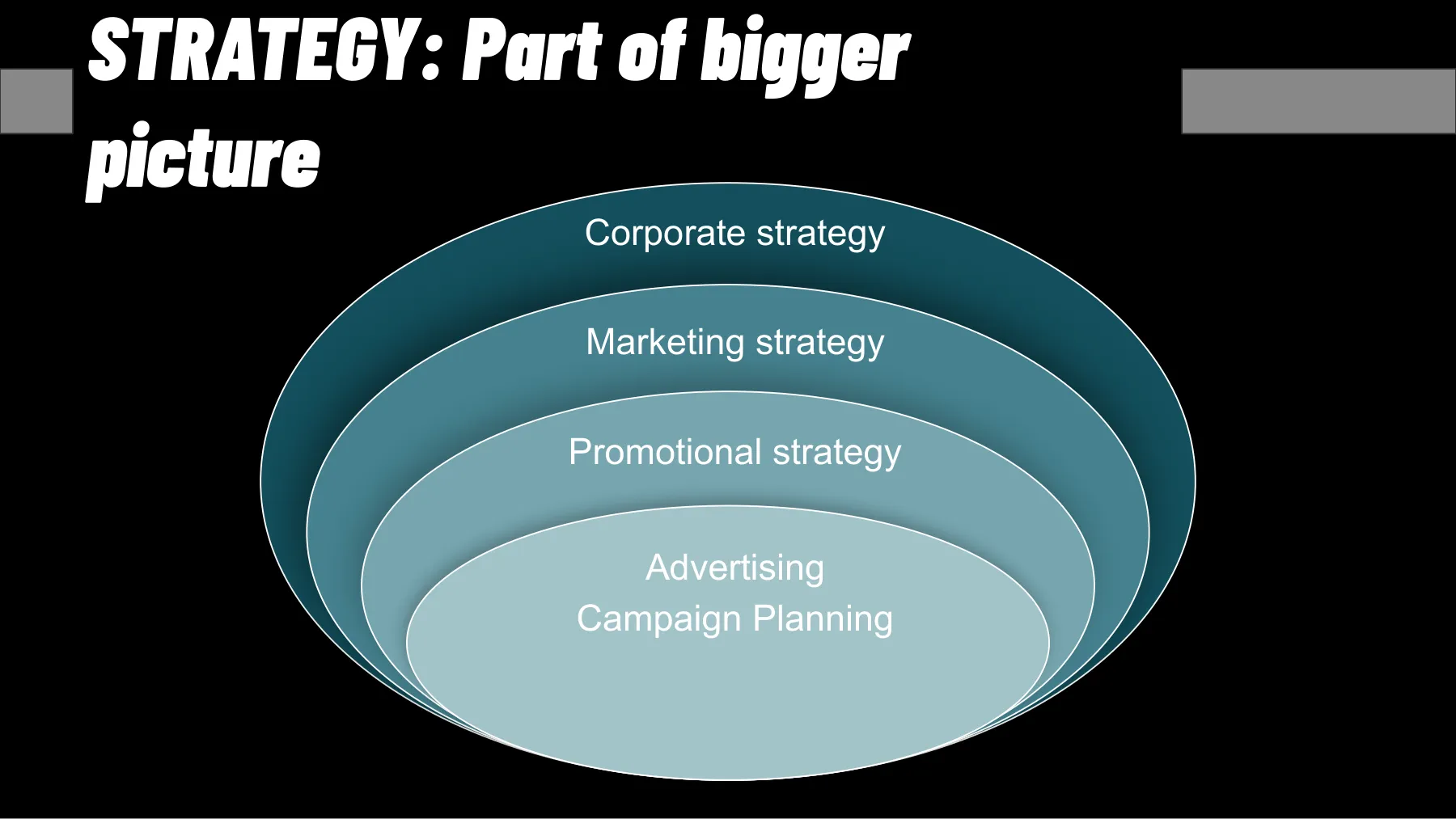
You covered positioning, the place a brand occupies in the customer’s mind relative to the competition, in the Marketing lesson, including the examples of Volvo (safety) and Tesla (technology). For the brand, one thing follows from it: positioning is the brief for everything else. Every element of the identity, the tone, and every campaign must strengthen the word you want to own in the customer’s mind; whatever dilutes it is noise, even if it’s pretty.
Brand strategy is a long-term plan for developing a brand’s purpose, consistency, and emotional impact; a plan that also tells you what the brand will not do. Five components: the vision (where we’re going: “What do we want to become?”), the mission (why we exist and what we do today), the positioning statement (for whom, what, how it’s different), the unique selling proposition (USP: the one reason to choose us), and the core messaging we repeat across all channels. Write it on one page; a strategy nobody reads doesn’t exist.
How much to spend on it: Les Binet and Peter Field analyzed 996 campaigns from the IPA databank (1980 to 2010) and arrived at an optimum of roughly 60% of the budget for brand building and 40% for short-term activation (discounts, performance advertising). Brand building works slowly but compounds; activation sells right away, and the next day nothing is left of it. The follow-up study Effectiveness in Context shifted the ratio to 62:38. How creative works, and the ELM model, are covered in the Advertising chapter.
- 60:40
- brand vs. activation, the optimum according to Binet and Field (IPA, 2013)
- 62:38
- the updated ratio in the follow-up study Effectiveness in Context
- 996
- campaigns from the IPA databank (1980–2010) behind the 60:40 ratio
IPA
IPA
IPA / Binet and Field
For discussion
What one word should FTVS own in the minds of applicants, and which elements of its identity strengthen or dilute it today?
Rabbit holes
- IPA: The Long and the Short of It, ten years on ↗ · Where the 60:40 ratio comes from and how it was updated.
11Brand equity: what a name is worth
Brand equity: what a name is worth
- ·The same T-shirt: $10 without a logo, $30 with the swoosh
- ·Interbrand 2025: Apple $470.9 bn, Microsoft 388.5, Amazon 319.9
- ·Google: $317 bn (Interbrand) vs. $1.5 tn (Kantar): a different methodology
- ·Czech Republic: Škoda 270th in Brand Finance Europe 500 (2024), the highest Czech brand
Brand equity is the added value a brand name brings beyond the product’s functional features. Example: the same cotton T-shirt costs $10, and $30 with the swoosh; those $20 are equity. It shows up in three ways: customers believe the brand offers higher value (willingness to pay more), the brand stands out in a crowded market (it comes to mind first), and loyal customers buy it again and again (lower cost of sales). Equity is the goal of everything we’ve covered: segmentation, positioning, and communication all build it over time.
Equity can be measured, though every methodology does it differently. Interbrand calculates it from financial performance, the brand’s role in purchase decisions, and brand strength: in Best Global Brands 2025, Apple leads ($470.9 billion), followed by Microsoft (388.5), Amazon (319.9), and Google (317.1). Kantar BrandZ is built on consumer surveys, and its 2026 edition gives Google $1.5 trillion (+57%) and the whole top 100 $13.1 trillion; the fastest grower was ChatGPT (+285%). The gap between $317 billion and $1.5 trillion for the same brand isn’t a mistake; it’s a different question. Read the ranking as a trend and an order, not as a price tag.
Czech benchmarks: according to Brand Finance, Škoda is the highest-ranked Czech brand in the European top 500 (270th in the 2024 edition, 18 places higher than the year before); the most valuable European brand that year was T-Mobile at €68.4 billion. For small companies, equity is more concrete and free to measure: how many people type your name straight into a search engine (Google Search Console) or come to you directly (direct traffic in Umami), how many customers come back, and how much you can raise prices before they leave. If you have to buy every customer again with advertising, you have no equity.
- $3.6 tn
- the 100 most valuable brands according to Interbrand 2025, +4.4% in a year
- +116%
- Nvidia, the biggest brand value growth in 2025 ($43.2 bn)
- 270th
- Škoda in Brand Finance Europe 500 (2024), the highest of the Czech brands
Interbrand (press releases)
Interbrand (press releases)
Brand Finance / MediaGuru
The world’s most valuable brands according to Interbrand 2025
unit: $ bn
Four tech brands are worth more than the rest of the top ten combined. The 2025 edition (the 2026 edition had not been published as of October 2026).
data table
| Apple | $470.9 bn | |
|---|---|---|
| Microsoft | $388.5 bn | |
| Amazon | $319.9 bn | |
| $317.1 bn | ||
| Samsung | $90.5 bn | |
| Toyota | $74.2 bn | |
| Coca-Cola | $60.1 bn | |
| $57.3 bn | ||
| McDonald's | $53 bn | |
| Mercedes-Benz | $50.1 bn |
Rabbit holes
- Interbrand: Best Global Brands 2025 ↗ · The top 10 with values and a link to the full report.
- Kantar BrandZ 2026: Most Valuable Global Brands ↗ · Google back in first place ($1.5 trillion, +57%), the top 100 worth $13.1 trillion, ChatGPT +285%.
- MediaGuru: T-Mobile is the most valuable European brand ↗ · Brand Finance Europe 500 and Škoda in 270th place (in Czech).
- Interbrand 2025 in the media: Nvidia and the top 100 ↗ · A summary of the report: $3.6 trillion and Nvidia’s jump.
12The Nike story: how value gets lost
Nike: three decisions in 2020, a third of the brand’s value gone by 2025
- ·2020: a new CEO, the end of categories, a bet on direct sales and performance ads
- ·June 28, 2024: shares −20% in a day, −$28 bn in market value
- ·Interbrand brand value: $53.8 bn (2023) → $33.7 bn (2025)
- ·Fiscal 2025 revenue: $46.3 bn (−10%); Elliott Hill in charge since October 2024
Massimo Giunco, a former senior marketer at Nike, published a piece on LinkedIn in July 2024 titled Nike: An Epic Saga of Value Destruction. He describes three decisions by management after John Donahoe took over (CEO from January 13, 2020): scrapping the product categories (running, basketball, football) in favor of a men, women, kids split; the shift to direct-to-consumer sales (DTC: Nike.com and its own stores) while cutting back wholesale partners; and moving marketing from brand building to data-driven performance marketing, which, according to him, got twice as much or more than the other brand activities usually received, while local creative teams were being disbanded.
The consequences: inventory grew from $6.9 billion (May 2021) to $9.3 billion (November 2022) according to Nike’s filings (Giunco rounds these to $6.5 and $10 billion), discounts on Nike.com squeezed the gross margin from 46% (fiscal 2022) to 43.5% (2023), and according to Giunco, the brand lost its creative distinctiveness: he compares the 2008 Human Race campaign with a 2024 offer of a 20% discount for running five kilometers. He quotes Byron Sharp: growth comes from new and light buyers, not from remarketing to those who already buy. The market answered on June 28, 2024: after a forecast of falling sales, the stock dropped 20% in a day, the most in the company’s history, and $28.4 billion of market value vanished.
The annual reports show where it led. Revenue for fiscal 2025 (ending May 31, 2025) fell to $46.3 billion from $51.4 billion, down 10%; Nike Direct, the channel the company had bet on, fell 13% (from $21.5 to $18.8 billion), and the gross margin fell to 42.7%. Interbrand cut the brand’s value from $53.8 billion in 2023 to $45.4 billion in 2024 and $33.7 billion in 2025 (23rd place, −25.9% year over year). In September 2024, Nike announced that veteran Elliott Hill (32 years at the company) would return to lead it from October 14, 2024; Donahoe left.
The lesson is not “DTC is bad” or “data is bad.” It’s about the ratio from the previous section: when you move budget from brand to activation, the numbers on the dashboard go up (return on ad spend, ROAS; conversions of existing customers) while the brand quietly gets poorer, because nobody measures how many people have stopped thinking of you. Nike found out with a two-year lag that can’t be made up with a single campaign. The Advertising chapter covers creative and performance metrics in detail; the Sports chapter explains why a sports brand lives on emotion.
- −20%
- Nike shares on June 28, 2024, the biggest one-day drop in the company’s history
- $28.4 bn
- market value lost in a single day
- $33.7 bn
- Nike brand value in 2025, down from $53.8 bn in 2023
- −13%
- Nike Direct in fiscal 2025, the channel the company had bet on
Reuters / Al Jazeera
Reuters / Al Jazeera
Interbrand
Nike 10-K FY2025
Nike revenue by fiscal year (ending May 31)
unit: $ bn
Record highs in 2023 and 2024, then a 10% drop: the decisions of 2020 and 2021 showed up with a delay.
data table
| FY2019 | $39.1 bn | |
|---|---|---|
| FY2020 | $37.4 bn | |
| FY2021 | $44.5 bn | |
| FY2022 | $46.7 bn | |
| FY2023 | $51.2 bn | |
| FY2024 | $51.4 bn | |
| FY2025 | $46.3 bn |
For discussion
Which of Giunco’s three decisions would you have made too if all you could see was the performance advertising dashboard?
Rabbit holes
- Giunco: Nike, An Epic Saga of Value Destruction ↗ · The full piece with numbers and comments.
- Al Jazeera: Nike stock plunges on surprise forecast ↗ · −20% and $28.41 billion in one day.
- Nike: fiscal 2025 results ↗ · Revenue of $46.3 billion, Nike Direct −13%, margin 42.7%.
- Nike: Elliott Hill named CEO (SEC 8-K) ↗ · The announcement from September 2024.
13When a rebrand fails
A rebrand customers don’t adopt never happened
- ·Jaguar 2024: “Copy Nothing” without cars; April 2025: 49 registrations in Europe
- ·Twitter → X (2023): brand value $5.7 bn → $0.67 bn (Brand Finance)
- ·Tropicana 2009: new packaging, −20% sales in two months, pulled
- ·With a plan: Mapy.cz → Mapy.com, Chance Liga, Škoda Group by 2029
- ·What works: evolution, a migration plan, testing on people before printing
In November 2024, Jaguar launched its Copy Nothing campaign: models in bright colors, no car, a new logo and wordmark, and at the end of the year the Type 00 concept as a promise of an electric future. The internet was entertained, and Elon Musk publicly asked whether they still sell cars. In April 2025, Jaguar registered 49 cars in Europe, against 1,961 a year earlier (−97.5%). To be fair: the main cause was a planned “firebreak”; the company stopped producing almost its entire lineup ahead of the switch to electric cars, so dealers had nothing to sell. But the campaign damaged the thing that was supposed to survive the transition: the trust of existing customers.
In July 2023, Twitter renamed itself X over a weekend, with no migration plan. Brand Finance valued the Twitter brand at $5.7 billion (2022) and $3.9 billion (2023), and the X brand at $673 million (2024); brand strength fell by 12.7 points to 56.9 out of 100. Estimates of the immediate loss in 2023 ranged from $4 billion to $20 billion, depending on the methodology. People still say “tweet”; the company threw away a verb it had in the language for free. A rebrand that customers don’t adopt never happened; all that happened was the cost.
A textbook classic: on January 8, 2009, Tropicana rolled out new packaging in North America from the Arnell studio: a glass of juice instead of the orange with a straw, and a new wordmark. Customers didn’t recognize the carton on the shelf, sales fell by about 20%, and on February 23, 2009, the company pulled the packaging; the loss is estimated at $30 million in revenue plus $35 million for the accompanying campaign. For fast-moving consumer goods, packaging is the biggest advertising space and at the same time a distinctive brand asset; you change it millimeter by millimeter.
Three fresh Czech cases show that it can be done with a plan. Seznam’s maps first went abroad in 2017 under a different name: as Windy Maps, with the Windy app, another project of Seznam’s founder and owner Ivo Lukačovič. That first attempt didn’t work out, according to CzechCrunch, and in 2022 Windy Maps merged into the Mapy.cz app. The second attempt changes just two letters. On March 24, 2025, Seznam announced that Mapy.cz would become Mapy.com. The Czech domain ending was holding back growth abroad, where up to 30% of users came from in 2024, and Seznam’s David Finger called the new name a compromise between Czech roots and clarity for foreign users. The website moved to the new domain on May 19, 2025, the app works the same, and the old address mapy.cz now redirects to mapy.com. The name Mapy stayed and only the ending changed: evolution instead of revolution.
Sports have rebrands on the calendar, because the title partner rents the league’s name. On July 1, 2024, the betting company Chance from the Tipsport group replaced Fortuna, and the top Czech soccer league is called Chance Liga for five seasons. But the League Football Association (LFA) also picked a new identity through a tender, from the studio Touch Branding: dark blue and lime green, new logos, typography, and jingles. According to the LFA, it had to be modern, multi-brand, aimed at young people, timeless, and usable even after the next change of partner; according to its designer, the league got an identity of its own for the first time. The name is rented, the look stays with the league, and the next sponsor change doesn’t have to start from zero.
The hardest rebrand is the one you don’t choose. Two companies carry the Škoda name: the carmaker in Mladá Boleslav, part of the Volkswagen Group, and Škoda Group in Pilsen, a maker of trams and trains owned by the PPF group. To end trademark disputes and mix-ups, in June 2022 Škoda Group sold the rights to the brand to Škoda Auto and may use the name and the winged arrow until 2029. So the company, with nearly 170 years of history, is preparing a new name and identity with the agency Dynamo design and the naming specialists Name & Fame. It will unveil them in September 2028 at InnoTrans, the transport technology trade fair in Berlin, and must complete the whole transition by June 2029 at the latest. CEO Petr Novotný summed it up by saying the name will change, but not the most important things. The task is to carry the trust the old name holds over to the new one.
What this means for your own rebrand:
- -Evolution instead of revolution: in 2022, Škoda kept its badge, flattened it, and gave it a year-long rollout; LA28 has a fixed frame and a changing A
- -A migration plan: redirects, the old name next to the new one for six months, an explanation of why
- -Test on people before printing: do they recognize the package on the shelf in three seconds? Can they recall the name from the logo?
- -Product first, then the campaign: a rebrand without a new promise is expensive cosmetics
- -Keep what people use: the verb “to tweet,” the orange with a straw, Škoda’s green
- 49
- Jaguar cars registered in Europe in April 2025 (1,961 a year earlier)
- −20%
- Tropicana sales two months after the new packaging (2009)
- $673 m
- X brand value in 2024, down from $5.7 bn in 2022
- June 2029
- the latest date by which Škoda Group in Pilsen drops the Škoda name
ACEA (via Motor1)
Ad Age / IRI
Brand Finance
Škoda Group / ČTK
Twitter / X brand value according to Brand Finance
unit: $ bn
The July 2023 rename with no migration plan, plus collapsing ad revenue: within two years, only an eighth of the value was left.
data table
| 2022 (Twitter) | $5.7 bn | |
|---|---|---|
| 2023 (Twitter) | $3.9 bn | |
| 2024 (X) | $0.7 bn |
Rabbit holes
- Brand Finance: The decline of X ↗ · Values for 2022 to 2024 and the explanation.
- Motor1: New Jaguar registrations were hilariously low ↗ · ACEA data: 49 registrations in April 2025 against 1,961 a year earlier, −97.5%.
- Cars & Culture: No, Jaguar sales didn't tank just because of the ad ↗ · Why the drop is mainly down to the production pause.
- The Branding Journal: Tropicana 2009 ↗ · The packaging before and after, the numbers, and the timeline.
14Personal brand and checklist
A brand for one: personal brand and checklist
- ·Personal brand = what people say about you when you’re not in the room
- ·Your own domain, one topic, consistency; social media is rented
- ·Name: memorable, short, pronounceable, available, protectable
- ·Checklist to take home: ten naming criteria and a one-page strategy
Everything above applies to a single person too. A personal brand is a reputation you build deliberately: the topic people look you up for, the tone you speak in, and the place where they find you. For FTVS students, this is concrete: a coach, a physiotherapist, a club manager, or an athlete has a brand whether they want one or not. The only difference is whether they manage it.
The rules are the same as for a company, just cheaper. One topic, not five. Your own domain and website as home base (social media is rented; the algorithm and the rules change without you; more in the Internet and Social Media chapters). Consistency instead of bursts. The same photo, name, and bio everywhere. And honesty: a personal brand differs from a corporate one in that it can’t be outsourced; people can tell when an agency or a model is writing for you without your oversight.
When you start a new brand, corporate or personal, start with the name. Go through ten criteria before you buy the domain:
- -Memorable: it sticks after one reading
- -Meaningful: it evokes the right associations
- -Short: ideally one to three syllables
- -Easy to spell and pronounce, even for foreigners
- -Unique: distinguishable from competitors, including in search engines
- -Positive: no unwanted meanings in other languages
- -Protectable: can be registered as a trademark
- -Likable: pleasant to hear
- -Staying power: won’t be embarrassing in five years
- -Available: domain, social media accounts, the ÚPV and EUIPO registers
For discussion
What three words would a client you’ve trained for six months use to describe you? And which three would you want them to use?
For the exam
Terms
- -Brand, branding, identity: the brand is the result in the audience’s mind, branding is the activity that shapes it, and identity is the set of tools you fully control.
- -Archetype: the role the brand plays in the customer’s story (Hero, Rebel, Caregiver…), ideally one primary and one secondary.
- -Brand manual: a document kept in one accessible place that says what, how, and above all how not: logo, colors, fonts, tone of voice, templates.
- -Brand architecture: branded house (one name), endorsed (the parent brand vouches), or house of brands (independent brands); the transfer of trust and of risk decides.
- -Brand migration: the plan for how customers and their trust move from the old name to the new one, meaning redirects, the same login, familiar faces in the campaign, and enough time; that is how Voyo and O2 TV moved into Oneplay and Mapy.cz to Mapy.com.
- -Brand equity: the added value a name brings beyond the product’s functional features, like the $20 difference between a T-shirt without a logo and one with the swoosh.
Numbers
- -60:40: the optimal budget split between brand building and short-term activation (Binet and Field, IPA)
- -CZK 5,000: a national trademark application for up to three classes, valid for 10 years (ÚPV)
- -$33.7 billion: Nike’s brand value in 2025, down from $53.8 billion in 2023 (Interbrand)
The final exam is online in the last lesson, in English: 30 questions with three options each from the whole course, and you need 80% to pass. It asks about the terms in the For the exam boxes and how to apply them, much like the quizzes at the end of each lesson.
Final quiz
1A soccer club is dealing with three things: a new logo from a design studio, a season-ticket campaign, and what fans are saying about the club after a weak season. Which one does the club have the least influence over?
- a)The logo and colors, because an outside studio designed them
- b)The campaign, because season-ticket sales can’t be predicted
- c)What fans think of the club, which is the brand itself
answer
c) What fans think of the club, which is the brand itselfThe brand is the result in the audience’s mind, so the club influences it only partly, while it fully controls the identity (logo, colors) and has a lot of control over branding (section 3).2An outdoor brand appears as the Hero in one campaign, as the Jester in the next, and over time also as the Sage, the Caregiver, and the Rebel. What’s wrong?
- a)Five archetypes means none; it needs a primary and a secondary
- b)The archetype should match the target group, not the brand’s role
- c)Hero and Rebel rule each other out; other pairs would work
answer
a) Five archetypes means none; it needs a primary and a secondaryAn archetype is the role the brand plays in the customer’s story, and most brands have a primary and a secondary one; a brand with five has none (section 6).3An agency, a print shop, and a new colleague are using three different versions of the logo and two shades of red. What will fix this most reliably?
- a)Register the logo and the shade of red as a trademark with ÚPV
- b)A single home for the manual and files, shared as a link
- c)Email everyone the updated brand manual as a PDF attachment
answer
b) A single home for the manual and files, shared as a linkAn identity without a single place where everyone can find it falls apart, so the manual belongs on a portal or shared drive as the one source of truth, not in an email attachment (section 8).4A sports nutrition maker wants to sell a budget line in supermarkets alongside its premium line. Premium customers shouldn’t notice the connection. Which architecture should it choose?
- a)House of brands: the budget line under its own name
- b)Branded house: both lines under one name
- c)Endorsed: the budget line signed by the parent brand
answer
a) House of brands: the budget line under its own nameSeparate brands let you sell a premium and a budget product side by side without cannibalization, and customers often don’t even know they’re connected (section 9).5A sports brand moves most of its budget from brand building to performance advertising because return on ad spend (ROAS) and conversions are going up. Based on the Nike case, what is it missing?
- a)That the right split is the reverse: 40% brand, 60% activation
- b)That the dashboard can’t show who stops thinking of the brand
- c)That performance ads mainly reach new buyers, not existing ones
answer
b) That the dashboard can’t show who stops thinking of the brandWhen you move budget from brand to activation, the dashboard numbers go up while the brand quietly gets poorer, because nobody measures how many people have stopped thinking of it (section 12).
For next time
Student presentation at the start of lesson 06 Internet
Show the website of one club or event on a phone: what’s on the first screen, how many taps it takes to reach the sign-up or the ticket, and what you would change.
5 minutes, one student or a pair, three slides at most or a phone on the projector
Sources worth clicking
- 1Massimo Giunco: Nike, An Epic Saga of Value Destruction ↗ · A former Nike marketer breaks down three decisions after 2020 and what they cost; the basis of the case study.
- 2Nike, Inc.: 10-K annual report for fiscal 2025 (SEC) ↗ · The primary numbers: revenue, Nike Direct, margins; check Giunco for yourself.
- 3Interbrand: Best Global Brands ↗ · The brand value ranking with its methodology; Apple at $470.9 billion in 2025.
- 4Kantar BrandZ: Most Valuable Global Brands ↗ · The second major methodology, based on consumer surveys; compare it with Interbrand.
- 5Jennifer Aaker: Dimensions of Brand Personality (1997, PDF) ↗ · The original article with the five dimensions of brand personality.
- 6IPA: The next chapter for The Long and the Short of It ↗ · Binet and Field, the 60:40 ratio, and what we know about it ten years on.
- 7Brand Finance: The decline of X, Musk's rebrand wipes billions in brand value ↗ · Twitter / X brand value from 2022 to 2024 and why it fell.
- 8LA28 unveils new emblem (IPC) ↗ · What a dynamic identity looks like: a fixed frame, a changing A, 26 creators.
- 9Škoda Auto unveils a new logo, colors, and its future identity ↗ · Press release from August 30, 2022: a Czech example of identity evolution (in Czech).
- 10Mailchimp Content Style Guide ↗ · A public tone-of-voice manual under a Creative Commons license; a model for your own Voice and Tone chapter.
Rabbit holes
- Forbes.cz: Three management mistakes that sank Nike ↗ · A Czech strategist (September 2026) reads Giunco closely and refutes the claim that diversity is behind the fall (in Czech).
- Brand New (UnderConsideration) ↗ · An archive of reviews of new logos and rebrands with reader voting; find a brand you know.
- The Drum: Gap scraps new logo after online furore (2010) ↗ · A logo that lasted about a week: back to the blue square after a wave of criticism on Facebook.
- LA28: the fiftieth custom letter A ↗ · How a dynamic identity grows: the Paralympic version as the 50th design since 2020.
- Ehrenberg-Bass Institute ↗ · Byron Sharp’s institute, the home of How Brands Grow and the concept of distinctive assets.
- Wayback Machine ↗ · Enter the website of your favorite brand and see how its story and logo changed over 20 years.
- Wikipedia: Lovemarks ↗ · Kevin Roberts and the love × respect axis.