Lesson 10 · 90 minutes · 13 parts
Events
Events as the most powerful medium: types, purpose, revenue streams, budget, timeline, script, logistics, and risks. Judo Heroes Camp as a product, and the run sheet used to build the HOPI Inspires script.
This lesson has no English narration yet. The Czech version is narrated.
What you will take away
- -Explain why an event is the most powerful and most expensive medium, and when (not) to run one.
- -Tell event types apart by who pays, who comes, and what’s left afterward.
- -Write an event’s purpose in one sentence, with three measurable indicators.
- -Build a budget with a break-even point and a timeline from T-12 months to D-Day.
- -Build a run sheet with the columns Time · Dur · Item · Screen · Audio · Source · Who.
- -Name an event’s five biggest risks and have a plan B for each.
Lesson plan
- 3 minIntro and a question for the class · What was the last event you went to voluntarily and paid for? Guess how many business event attendances there are in a year.
- 5 minStudent presentation · Pick an event you attended and estimate where the money came from: tickets, partners, the bar, merch. What would you change as the organizer?
- 12 minWhy events, and event types · The most powerful medium in numbers; conference, trade fair, camp, tournament, festival, internal event; the Ice Hockey World Championship and Prague as a congress city.
- 12 minPurpose, revenue streams, budget · Purpose in one sentence, where the money comes from, fixed vs. variable costs, break-even for a model camp.
- 17 minTimeline, script, logistics · T-12 months to D-Day; the HOPI Inspires 2026 run sheet; people, venue, tech, food.
- 13 minRisks, and media at the event · Love Parade, Astroworld, crowd density; the risk register; judo tournaments as content factories.
- 8 minJHC case study and trends · The camp as a product: registration, capacity, payments, community; hybrid, data, sustainability, AI.
- 15 minPair exercise · Design an event for your club: purpose in one sentence, type, 3 revenue streams, 5 run sheet items, 3 risks. One or two pairs present.
- 5 minSummary and quiz · The organizer’s checklist and five questions.
Contents
- 1Why events: the medium that engages all the senses
- 2Event types: from a camp to a World Championship
- 3Purpose: the one sentence the event delivers
- 4Revenue streams: where the money comes from
- 5Budget: fixed, variable, break-even
- 6Timeline: from T-12 months to D-Day
- 7Script and direction: the run sheet
- 8D-Day logistics: people, venue, tech, food
- 9Risk and safety: what can go wrong
- 10Media and content at events: judo tournaments
- 11Case study: Judo Heroes Camp as a product
- 12Trends: smaller, hybrid, sustainable, data-driven
- 13Summary, exercise, and the organizer’s checklist
1Why events: the medium that engages all the senses
Events: the medium that engages all the senses
- ·1.65 billion business event attendances in 2025, $1.3 trillion spent (EIC)
- ·78% of organizers: conferences are our most effective marketing channel (Bizzabo)
- ·The only medium where customers come on their own, pay, and stay all day
- ·The most expensive content you’ll ever make: don’t throw it away after one day
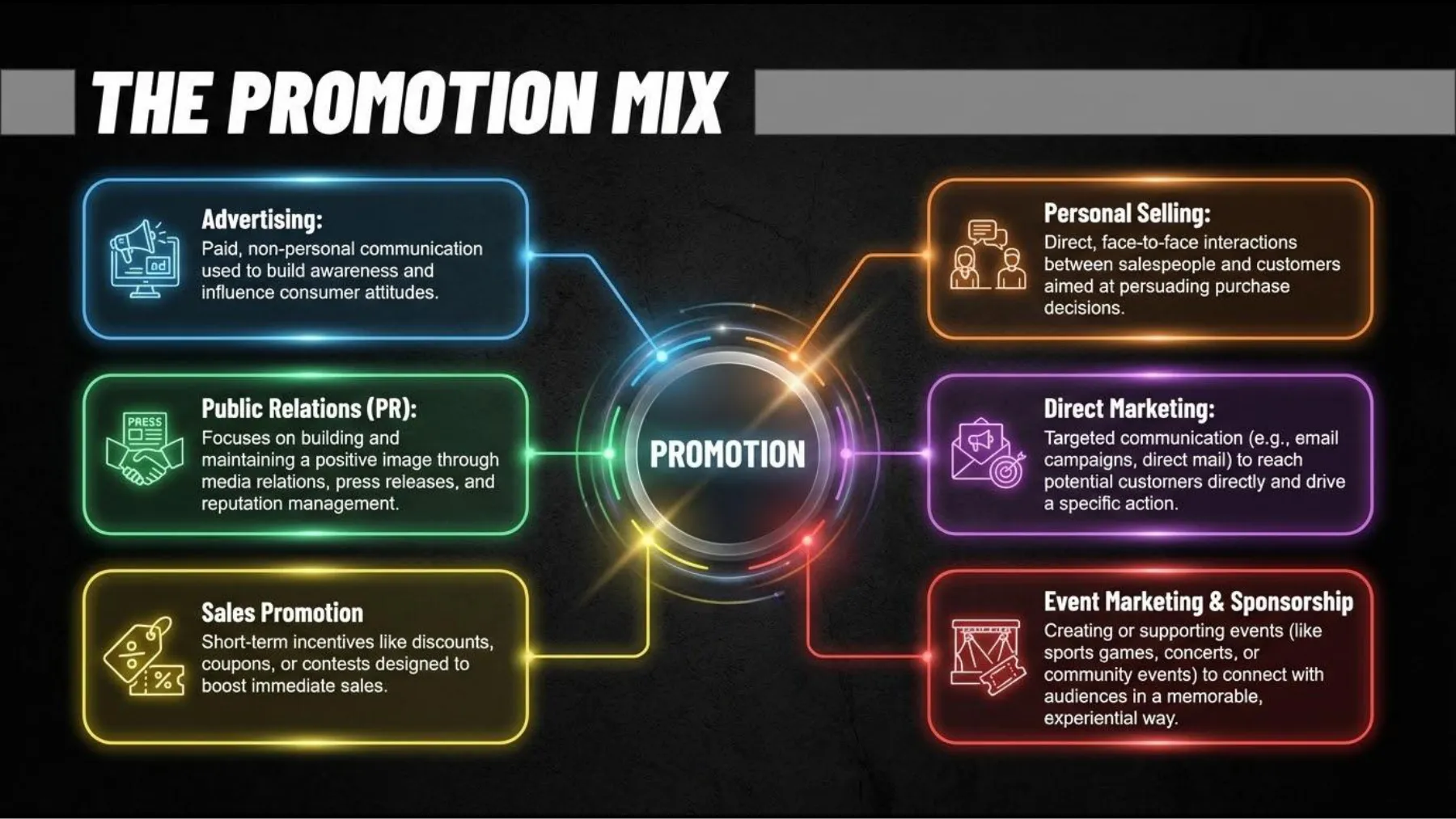
An event is a gathering of people at one time and usually in one place, with a program someone has prepared. It differs from other media in three ways. It engages all the senses: people see, hear, eat, shake hands, and see that others are there too (social proof). It has time: you give an ad three seconds, but you give an event a day. And the participant came on their own, often paid, and gave up part of their day; nothing else in the promotion mix gets that level of consent. In Marketing, events sit alongside advertising, PR, and personal selling.
The scale is bigger than it looks. According to a study by the Events Industry Council and Oxford Economics (2026 edition, 2025 data), business events (conferences, trade fairs, incentives, corporate meetings) counted 1.65 billion attendances; attendees are counted per event, so someone who went to five conferences may be in the number five times. Direct spending reached $1.3 trillion, 12.2% more than in 2019.
Marketers know it: in the Bizzabo 2026 State of Events survey, 78% of organizers named conferences and summits their company’s most effective marketing channel. Take that with a grain of salt: it comes from people who run events, and 40% of them struggle to prove return on investment (ROI), compared with 70% a year earlier. Events are powerful and expensive, so this whole class rests on one question: what should the event do, and how will we know? Two cases from my work will keep coming back: Judo Heroes Camp (13 editions since 2014, a capacity of 65 kids in the 2027 edition) and HOPI Inspires 2026 (HOPI’s corporate conference, whose script is a run sheet with seven columns).
- 1.65 bn
- business event attendances worldwide in 2025
- $1.3 tn
- direct spending on business events, +12.2% vs. 2019
- 78%
- of organizers: conferences are the company’s most effective channel
- 40%
- of organizers struggle to prove an event’s ROI (70% a year earlier)
EIC / Oxford Economics 2026
EIC / Oxford Economics 2026
Bizzabo 2026 State of Events
Bizzabo 2026 State of Events
For discussion
What was the last event you went to voluntarily and paid for? What got you there: the program, the people, or the fear of missing out?
2Event types: from a camp to a World Championship
Each type of event has a different payer
- ·Conference, trade fair, internal event, launch, camp, tournament, festival, roadshow
- ·2024 Ice Hockey World Championship in Prague and Ostrava: 797,727 fans, an all-time record
- ·Prague 2025: 5,000+ events, 850,000+ delegates, 6th place in the ICCA ranking
- ·Each type has different economics: who pays, who comes, what’s left
You can sort events along many axes, but for an organizer only one is useful: who pays, and for what. A conference is paid for by attendees and partners, who buy knowledge and contacts. A trade fair is paid for by exhibitors; the visitor is the product. An internal event is paid for by the company, which buys team cohesion. A product launch is paid for by the brand, which buys media attention. A camp is paid for by parents, who buy a week of care and training. A tournament is paid for by the federation, the city, and sponsors; spectators bring ticket money and emotion. A festival is paid for by visitors and sponsors; what’s sold is the experience.
Sport is a league of its own. The 2024 Ice Hockey World Championship in Prague and Ostrava drew 797,727 spectators over 17 days, an average of 12,464 per game, the most in history; the previous record was also held by Prague and Ostrava (741,690 in 2015). O2 arena seats 17,413 for hockey. In November 2020, the same arena hosted the European Judo Championships (40 countries, 345 athletes) in the middle of COVID restrictions: same venue, different economics. More in the Sponsorship chapter.
Prague is a congress city and one of the few places where we have Czech numbers. According to the Prague Convention Bureau (PCB) and ČSÚ (the Czech Statistical Office), more than 5,000 events with over 850,000 delegates took place here in 2025, and Prague finished sixth out of 4,728 cities in the ICCA ranking (led by Lisbon, Paris, and Barcelona). International events made up 43%, and the 50-to-500-person segment grew the most. For comparison, 2024: 5,139 events, more than 804,000 delegates, an average of 2.27 days, and fifth place in ICCA; according to the PCB, the industry still hadn’t returned to pre-COVID levels. Festivals: Rock for People reports growth from 37,000 (2023) to 50,000+ (2025 and 2026), and in the COVID year 2021 it ran with a permitted capacity of 7,000; Colours of Ostrava hasn’t published attendance since 2016.
- 797,727
- spectators at the 2024 Ice Hockey World Championship in Prague and Ostrava, an all-time record
- 850,000+
- delegates at 5,000+ events in Prague in 2025
- 6th
- place for Prague in the 2025 ICCA ranking, out of 4,728 cities
- 50,000+
- visitors to Rock for People in 2025 and 2026 (capacity of 7,000 in COVID-era 2021)
IIHF / Wikipedia
Prague Convention Bureau, ČSÚ
ICCA / Prague Convention Bureau
Rock for People / Wikipedia
Ice Hockey World Championship attendance by year
unit: k
Prague and Ostrava hold both records. 2020 was canceled, and 2021 in Riga was played without fans (a single game, 934 people); three years later, 797,727 came.
data table
| 2015 CZ | 741.7k | 741,690, the record at the time |
|---|---|---|
| 2018 DK | 520.5k | |
| 2019 SK | 470.9k | |
| 2022 FI | 357k | |
| 2023 FI/LV | 441.2k | |
| 2024 CZ | 797.7k | 797,727, average of 12,464 per game |
| 2025 SE/DK | 489.5k | |
| 2026 CH | 466.3k | 466,314, average of 7,286 per game |
Rabbit holes
- Prague Convention Bureau: 2025 statistics (press release, PDF) ↗ · The only Czech event statistics: event counts, delegates, ICCA, segments.
- Prague Convention Bureau: 2024 statistics (press release, PDF) ↗ · 2024 (in Czech): 5,139 events, 804,000 delegates, 2.27 days, 5th place in ICCA.
- Wikipedia: 2024 IIHF World Championship ↗ · The record-breaking championship in numbers: arenas, games, averages.
- Wikipedia: Rock for People ↗ · History since 1995 and attendance by year (in Czech).
3Purpose: the one sentence the event delivers
What the event should do
- ·Write the purpose in one sentence before you pick a venue
- ·Goals: sales, relationships, recruiting, knowledge, community, content, money
- ·Measurable: registrations vs. capacity, turnout, ratings, leads, revenue
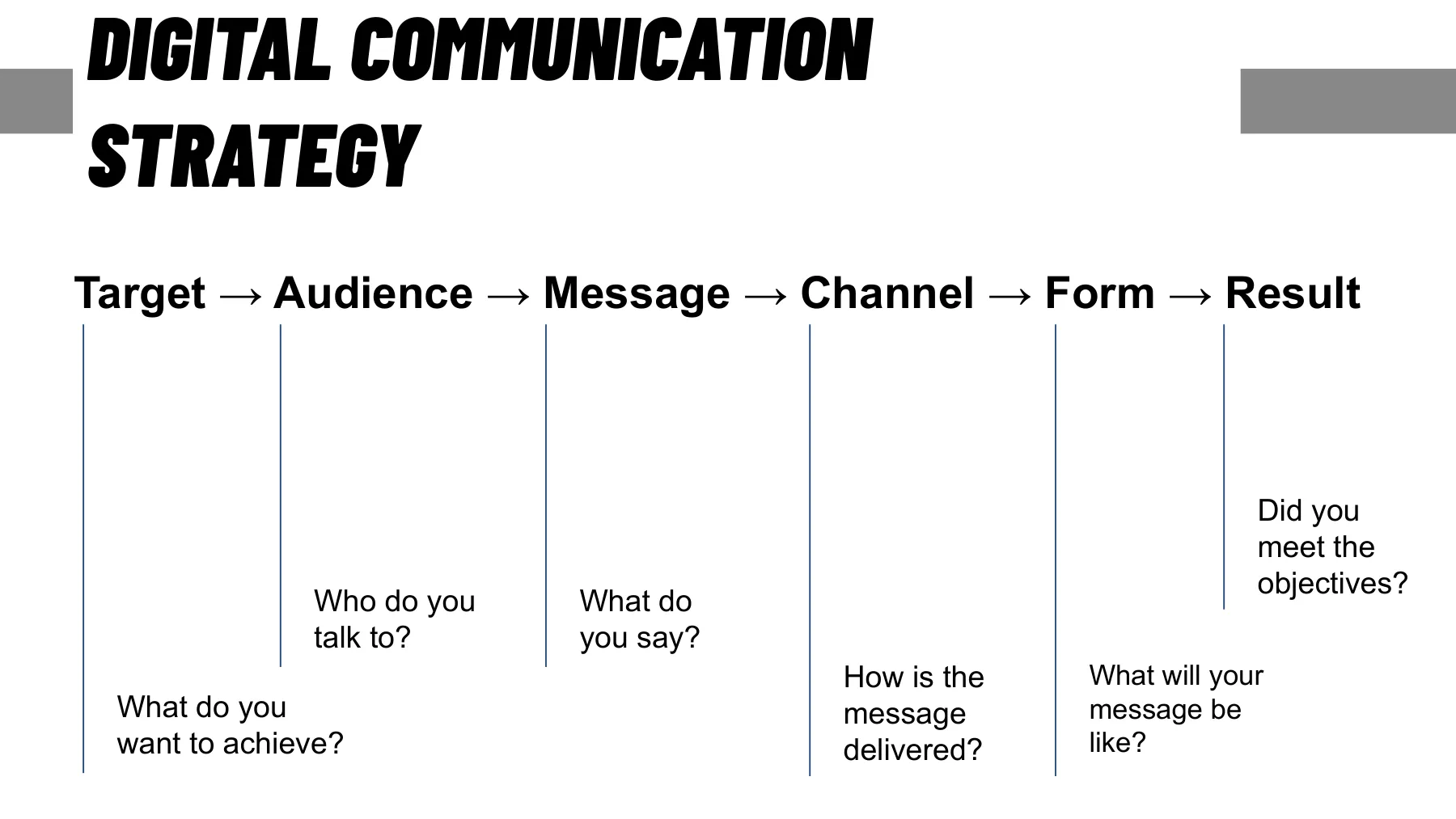
- ·Target → Audience → Message → Channel → Form → Result applies to events too
The most common organizer mistake is starting with the venue, the date, and the band. You know the right order from the Internet chapter: Target (what we want), Audience (for whom), Message, Channel (the event is the channel), Form (conference, camp, tournament), and Result (how we’ll measure it). Write the purpose in one sentence in the form “for whom · what it does · how we’ll know.” Example: “For parents of judokas aged 9 to 15: a week of training and care after which they recommend us to others; we’ll know from the ratings and the share of kids who come back.”
Event goals fit into seven words: sales (leads and orders), relationships (clients who stay), recruiting, knowledge, community (people who come back), content (what we can get out of the event to last a month), and money (when the event itself is the product). Each one comes with a number: registrations vs. capacity, the share of registrants who showed up, ratings, number of leads, number of clips and articles, revenue vs. costs. That way, ROI isn’t pieced together after the fact from impressions: the data is collected from the first registration on (see the timeline).
The purpose also decides what won’t be at the event. If the goal is relationships, there won’t be presentations; if it’s content, there will be five minutes for filming after every block; if it’s community, there will be an evening with no program. Whatever doesn’t serve the purpose is a cost.
For discussion
Pick a festival or tournament you go to. What is its purpose from the visitor’s point of view, and what is it from the organizer’s? Where do those two sentences differ?
Rabbit holes
- Freeman Trends Report: The Pre-Event Edition (2026) ↗ · When and how people decide to attend an event; 3,459 respondents.
- Bizzabo: event marketing statistics (2026) ↗ · Registration conversion, ROI, budgets, and formats in one overview.
4Revenue streams: where the money comes from
Where the money comes from
- ·Tickets · partners · merch · catering and bar · post-event content · grants · rentals
- ·Eras Tour: $2.077 billion from 149 shows, 10.1 million fans, over $200 per head
- ·Paris 2024: 9.5 million of 10 million tickets, 12.1 million with the Paralympics
- ·Fees: smsticket 5%, Eventbrite in the US 3.7% + $1.79 and 2.9% for payment
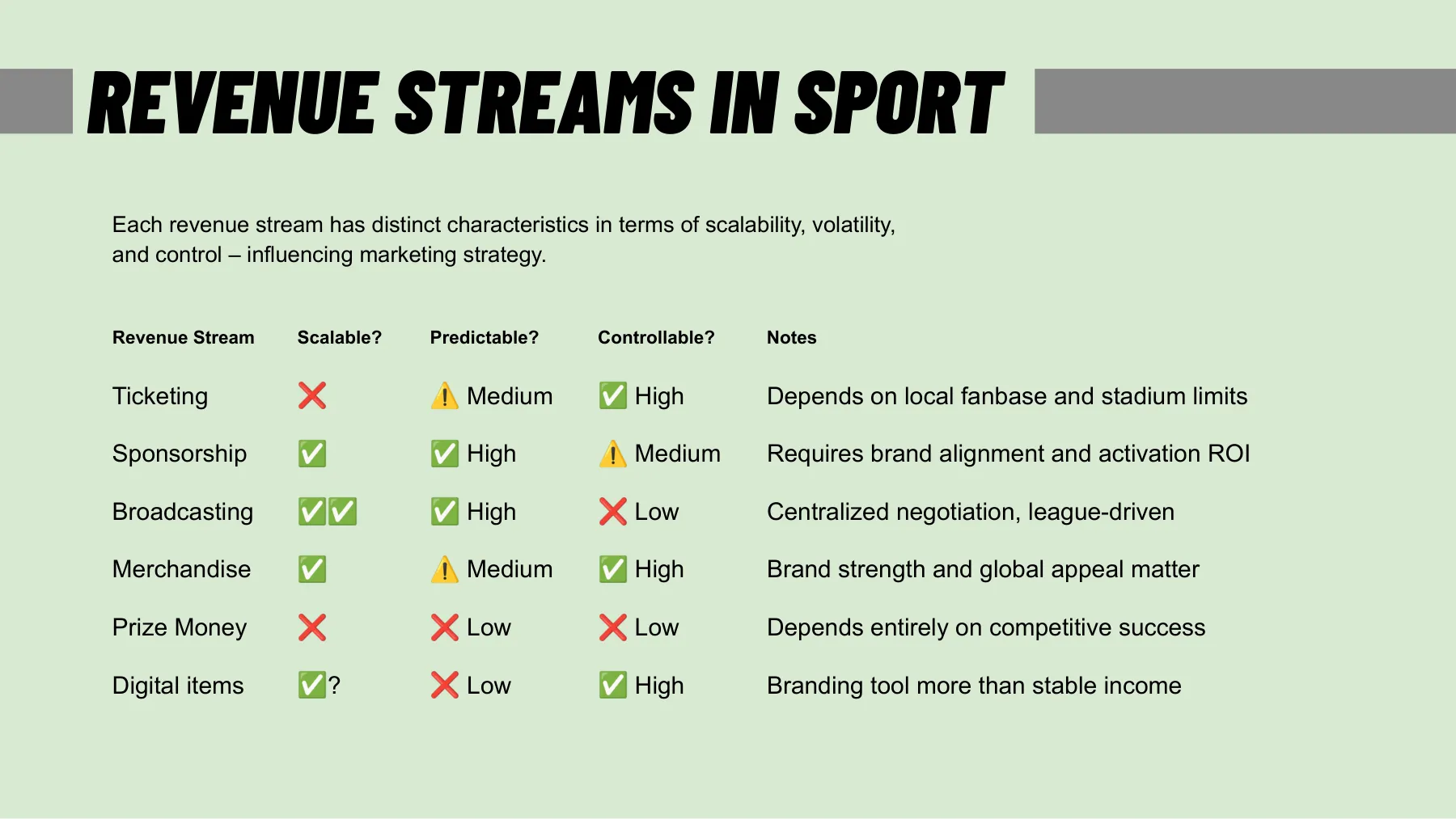
Money flows into an event through seven channels, and few events have all seven. Ticketing is price times capacity, with pricing tiers (early bird, standard, last minute) and segments (student, VIP, group). Partners don’t pay for a logo on the screen but for access to people: meetings, speaking slots, data, content; more in the Sponsorship chapter. Merch is both margin and advertising: a festival sells its T-shirt, a camp includes it in the price, and the kid wears it to practice all year. But the print shop wants a minimum order and every size; whatever doesn’t sell is inventory. Catering and the bar are a big source at festivals and parties, which is why people pay with tokens or cashless. Post-event content (recordings, transcripts) brings in money mostly indirectly: the organizer gives it away for a registration and gets contacts for partners and for next year’s edition. Grants keep sport and culture going, and floor space rental is what feeds trade fairs.
The biggest numbers show how far ticketing can go. Taylor Swift’s The Eras Tour (March 2023 to December 2024) grossed $2.077 billion from 149 shows for 10.1 million fans, roughly $13.9 million per show and over $200 per fan from tickets alone. The Paris 2024 Olympics sold 9.5 million of 10 million tickets, and 12.1 million with the Paralympics, a Games record.
Selling tickets isn’t free. The Czech service smsticket takes 5% of the ticket price, pays out within 24 hours, and provides a check-in app. In the US, Eventbrite charges 3.7% + $1.79 per paid ticket plus 2.9% of the order for payment processing, and nothing for free tickets; other countries have different pricing. The third route is your own registration with payment by bank transfer or through a payment gateway (Stripe, Comgate): no commission, but you handle payment matching yourself; see Internet. Revenue streams also differ in when they arrive: ticket sales and partner deposits finance the event, while the bar and content only bring money in during and after.
The Czech ticketing market has changed a lot over the past three years. The biggest player today is the Estonian group PLG: in 2023 it bought a majority of GoOut, then Ticketstream, and in June 2025 it bought Ticketportal from the media group Mafra; it plans to move all its brands onto a single platform by the end of 2026. Alongside it is Ticketmaster, owned by the American company Live Nation, which entered the Czech market in 2017 by buying the company Ticketpro. Tickets for the O2 arena are sold officially only by Ticketmaster and Ticketportal. Both sides pay. The organizer pays the seller a commission on the ticket price, at PLG usually 5% to 10%, depending on the contract. Commissions are negotiable: the 2026 contract between the Český Krumlov Municipal Theater and GoOut sets it at 4.91%. The buyer pays a service fee on top, at GoOut 3.5% of the ticket price, at least CZK 10 and at most CZK 500; smsticket charges buyers CZK 10 per order. More important than the percentages is who owns the customer. Under GoOut’s privacy policy, the platform and the organizer are separate controllers of personal data, and the organizer only gets the buyer’s email for its own marketing with the buyer’s explicit consent. So it’s mainly the platform that builds the audience, and it then sells reach back to organizers: according to its website for organizers, PLG sends newsletters to 1.7 million subscribers and sells promotion in them as paid packages. If you want to reach this year’s audience again next year without paying for reach, you need marketing consent at checkout, a tracking code on the ticket sales page, such as the Meta Pixel, or your own registration.
Demand can move the price too. Dynamic pricing changes the price depending on how many people are buying at the moment, just like airline tickets. The most famous dispute is the sale of tickets for the Oasis tour at the end of August 2024: after hours in Ticketmaster’s queue, fans saw tickets that were supposed to cost £135 going for £350. But in September 2025, the UK’s Competition and Markets Authority (CMA) found no evidence that dynamic pricing had been used. It was tiered pricing: standing tickets were sold at two prices, the more expensive ones came up once the cheaper ones sold out, and nobody told the people in the queue. On top of that, “platinum” tickets cost almost 2.5 times as much as standard ones, even though in some areas of the venue they offered nothing extra. Ticketmaster committed to announcing tiered pricing 24 hours in advance, showing the price range while fans are still in the queue, and not using misleading ticket labels. In sports, FIFA went furthest. It chose dynamic pricing for the 2026 World Cup partly because with a low fixed price, scalpers would pocket the difference and the money wouldn’t go back into football. In March 2026, the cheapest openly available ticket to the final cost $4,185, more than seven times the cheapest ticket to the 2022 final, and some tickets rose 25% between sales phases. But dynamic prices can also fall: at the 2025 Club World Cup, FIFA overestimated demand and then cut ticket prices sharply. In July 2026, the European Parliament called on the Commission to consider banning dynamic pricing at live sports and cultural events. The Commission is due to propose the Digital Fairness Act in the fourth quarter of 2026.
The rest of the market is resale, the secondary market for tickets that have already been bought. The resale marketplace StubHub has been one company with Viagogo since 2020 and has traded on the New York Stock Exchange since September 2025. Czech law does not generally ban reselling tickets at a higher price. But since January 6, 2023, under the Consumer Protection Act, it is always a misleading practice for a trader to sell consumers tickets it bought with automated software, so-called bots, to get around the per-person ticket limit. So organizers protect themselves. The O2 arena visitor rules say that a ticket resold without the organizer’s consent or for more than the printed price is invalid. Promoters use rotating QR codes or tickets in the holder’s name. Ticketmaster’s Czech site offers fan-to-fan resale in which the original ticket is canceled and the buyer gets a new one. At the 2026 World Cup, FIFA steered fans to its own resale marketplace and took 15% from both the buyer and the seller. Outside the official channels, fraud thrives: during the 2024 Ice Hockey World Championship in Prague and Ostrava, the police caught at least 700 fake or multiply sold tickets, and the losses reached about CZK 2 million. Elsewhere, the rules are getting tougher. In November 2025, the UK announced a ban on reselling tickets for more than the original price including fees, but in May 2026 the government put it forward only as a draft bill for further scrutiny. In the US, since September 2025, the Federal Trade Commission has been suing Ticketmaster and Live Nation, alleging that they ignored brokers getting around ticket limits and, by its estimate, collected $3.7 billion in resale fees from 2019 to 2024.
- -Primary sales: the first sale of tickets by the organizer through a ticketing platform, such as Ticketportal, GoOut, or Ticketmaster.
- -Commission and service fee: the organizer pays the seller a commission on the ticket price, and the buyer pays a service fee on top of the price.
- -Dynamic pricing: the price changes during the sale depending on demand, up or down.
- -Tiered pricing: several fixed prices for the same type of seat; the more expensive ones go on sale once the cheaper ones sell out.
- -Secondary market (resale): reselling tickets that have already been bought; official resale cancels the original ticket and issues a new one.
- -Named ticket: a personalized ticket that only the person it was issued to can use to get in; it makes business harder for scalpers.
- $2.077 bn
- The Eras Tour revenue from 149 shows (2023–2024)
- 5%
- smsticket fee per ticket sold, payout within 24 h
- 3.5%
- GoOut service fee paid by the buyer, CZK 10 to 500, on top of the organizer’s commission
- 2.5×
- “platinum” Oasis tickets cost almost this many times the standard price
Wikipedia / Sisario 2024
smsticket.cz
GoOut: fees
CMA, 2025
Rabbit holes
- smsticket: for organizers ↗ · Czech ticketing pricing: 5% and what it includes (in Czech).
- Eventbrite: organizer pricing ↗ · For comparison: a percentage plus a fixed fee plus payment processing (US pricing).
- Wikipedia: The Eras Tour ↗ · The biggest tour in history in numbers: shows, fans, revenue.
- CMA: Ticketmaster changes after the Oasis tickets investigation (2025) ↗ · What the UK regulator found about tiered pricing and “platinum” tickets, and what Ticketmaster committed to.
5Budget: fixed, variable, break-even
An empty seat hurts more than a discount
- ·Fixed: venue, tech, speakers. Variable: food, bed, T-shirt per head
- ·Break-even = fixed costs ÷ (price − variable cost per person)
- ·A 10% contingency, and decide in advance which block gets cut first
- ·Bizzabo 2026: budgets up for 40%, down for 20%; 45% of teams have 1–3 people
An event budget has two parts, and the line between them decides both price and capacity. Fixed costs you pay no matter who shows up: venue, stage, tech, speakers, band, production, graphics, insurance, website. Variable costs grow with every participant: food, bed, T-shirt, name badge. The break-even point is the number of participants at which revenue covers costs: fixed costs divided by the difference between the price and the variable cost per person. A model example, not the camp’s real budget: fixed costs CZK 250,000, variable CZK 8,000 per child, price CZK 12,750; the margin per child is CZK 4,750, and break-even is 53 kids out of 65. That’s why empty seats hurt organizers more than discounts.
Three rules. Price isn’t calculated as costs divided by capacity, but from the break-even point at a realistic occupancy; if you count on a full house, you’re planning a loss. A contingency of at least 10%, and a list written in advance of what gets cut first if revenue falls short: decorations and gifts first, then the band, never food and safety. Cash flow: the venue and the hotel want deposits months ahead, ticket money comes in gradually, partners pay on invoice; next to the “how much” column, your spreadsheet needs a “when” column. What people forget: VAT, music royalties (OSA, the Czech collecting society for music), liability insurance, a medic, cleaning, licenses for photos and music, transporting the equipment, and your own people’s time, which is the most expensive of all.
Where budgets stand in the industry: according to Bizzabo 2026, 40% of organizers expect their event budget to grow, 40% expect it to stay the same, and 20% expect a decrease; 45% of event teams have one to three people. The trade fair industry is more cautious: in UFI’s 37th Global Exhibition Barometer (July 2026, 466 respondents from 59 countries), only 26% of companies expect activity to grow by more than 5%, compared with 44% six months earlier. The money is there, but it wants to see what it gets in return.
- 40%
- of organizers expect event budgets to grow in 2026, 20% expect a decrease
- 45%
- of event teams have 1–3 people
- 26%
- of trade fair companies expect growth above 5% (44% six months earlier)
Bizzabo 2026 State of Events
Bizzabo 2026 State of Events
UFI Global Exhibition Barometer, July 2026
6Timeline: from T-12 months to D-Day
Plan backward from D-Day
- ·T-12: purpose, date, venue, budget · T-9: speakers, partners
- ·T-6: open registration · T-3: full-on communication, tech, catering
- ·T-1 month: run sheet, team brief, rooming list
- ·84% of people decide a month or more before registering (Freeman 2026)
- ·D+1 to D+14: thank-yous, survey, content, final accounts
A timeline is planned backward from D-Day. T-12 months: purpose in one sentence, a date without clashes (school breaks, public holidays, championships, competing events), a venue you’ve seen in person, a rough budget, a contract with the venue. T-9: speakers, performers, partners. T-6: website and registration open, first pricing tier. T-3: full-on communication, tech booked, catering, accommodation, photographer and videographer. T-1 month: run sheet, team brief, rooming list, name badges, printing, confirmations to suppliers. T-1 week: tech rehearsal, weather, stand-ins. D-Day: one boss, one phone, one script. D+1 to D+14: thank-yous, survey, content, final accounts, lessons learned, and the date of next year’s edition.
The most underestimated part is registration. According to Freeman, 84% of attendees decide to go to an event a month or more before they register; registration has to be open while people are deciding, and for a summer camp that means the fall of the previous year. According to Bizzabo, a dynamic form converts at 24.4% versus 11.6% for a static one; every extra field costs you sign-ups, so only ask for what you need for the event.
Communication comes in waves: the announcement (date, place, price, why), the program, social proof (who’s already going, ratings from last time), urgency (last spots, end of a pricing tier), practical information a week before and the day before. Each group (parents, attendees and their bosses, clubs, the media) has a different question and a different channel; see Media. Next year’s cheapest attendee is this year’s; the Judo Heroes Camp registration form lists “We were here last year” among the referral sources.
7Script and direction: the run sheet
The run sheet: one document for everyone
- ·Columns: Time · Dur · Item · Screen · Audio · Source · Who
- ·Times from durations; fixed items (lunch, shuttle) anchor, rehearsals run in parallel
- ·The HOPI Inspires 2026 script has exactly these seven columns
- ·Director, host, and tech crew all look at the same version on their phones
The run sheet (or cue list) is the only document that counts on D-Day. Each row is a program item with seven columns: Time, Dur (duration), Item (what’s happening), Screen (what’s on the screen), Audio (which mic, what music), Source (which computer it plays from), and Who (who’s on stage and who’s responsible). Excel can handle it, but the times have to be recalculated by hand after every change, and soon three versions are going around.
That’s why a good run sheet distinguishes three time modes. A sequential item starts where the previous one ended; its time is calculated from the durations. A fixed item has a hard time: lunch, shuttle, check-out, a live broadcast slot; if the items before it finish early, a gap shows up, and if they finish late, a red overrun. A parallel item runs alongside the main line and doesn’t move the clock: the band’s sound check, filming an interview during a break. A guest who talks 10 minutes too long would push lunch back; lunch can’t move, so something in between gets cut.
The HOPI Inspires 2026 script has exactly these seven columns, and its times are calculated from durations: change the length of one item, and all the following ones shift. What run sheets often leave out: setup, transitions (who introduces whom, music between blocks), loops during breaks, the countdown, and time for filming. These items also belong in the table with a duration and a name, or no one will keep track of them on D-Day. The same logic applies to streams and online conferences; see Streaming.
Rabbit holes
- HOPI Inspires 2026: attendee website ↗ · What an event info site looks like: program, shuttle, tokens, wellness, detour (in Czech).
8D-Day logistics: people, venue, tech, food
D-Day: one boss, one script, one phone
- ·People: one boss, roles with names, briefing the day before, phone numbers on paper
- ·Venue: walk the attendee’s path from the parking lot to the seat
- ·Tech: test the sound, wired internet, a backup laptop
- ·Food: serving in waves, allergies from registration, free soft drinks, bar on tokens
People. On D-Day, the event has one boss (the producer) who makes the decisions, and roles with names: director, host, registration, technician, photographer and videographer, medic, hostesses, shuttle driver. Briefing the day before, and a phone list on paper too. For guests, everything that matters goes into one overview: what they get at registration, what they’re entitled to (drinks, wellness), meal and transport times; one example is the public HOPI Inspires 2026 website with the program, transport, teams, and drinks. What isn’t in the overview, the team doesn’t promise guests.
Venue. Walk the attendee’s path: parking, signage, registration, coat check, restrooms, the hall, refreshments, emergency exits. The bigger the event, the more the flow of people matters, not the decorations. Two hotels with a shuttle between them mean a timetable in the run sheet. Tech. Read the venue’s tech sheet before you send out presentations: how many microphones there are and what kind (handheld, headset), what resolution and aspect ratio the projector has (on a 16:10 screen, 16:9 slides will have bars), and whether the HDMI at the connection point also carries sound or the audio runs separately, for example into XLR. The rules from the HOPI Connect studio apply in a hall too: always test the sound, use wired internet, charge the mics after every use. Plus a backup laptop with the same files.
Food. A meal is a program item with a fixed time and the most common source of complaints. Waves by name badge color, three serving points instead of one, drinks on tokens, free soft drinks. Allergies and diets are collected at registration, not at the serving counter. And food for the crew: a production team that hasn’t eaten since six in the morning makes mistakes at six in the evening.
- -Morning: crew arrival, tech check, content test from the control laptop, mics charged, loop on the screen, signage, registration.
- -Registration: the list offline too, name badges in alphabetical order, bags, what to tell everyone (color, tokens, meal times, Wi-Fi).
- -Evening and day two: room changeover, the awards, who turns off the lights; breakfast, packing up the tech, check-out, inventory.
For discussion
Twenty minutes before the start, there’s no sound coming from the laptop, the hotel technician is at lunch, and the first speaker has a video. What do you do, and in what order?
9Risk and safety: what can go wrong
Risks: probability × impact × plan B
- ·Love Parade 2010: 21 dead, a single entrance through a tunnel, capacity of 250,000
- ·Astroworld 2021: 10 dead, the show ran 32 more minutes after a mass casualty was declared
- ·Density: up to 4 people per m² is fine, around 5 a crush risk, 8–10 collapse
- ·Risk register: what, probability, impact, plan B, who can stop the event
Risk isn’t managed with fear but with a spreadsheet. A risk register has five columns: what can happen, how likely it is, what impact it will have, what we’ll do (plan B), and who decides. The last column matters most: who has the authority to stop the program, close the entrance, or evacuate the hall, decided in advance.
Two cases that changed the industry. Love Parade, Duisburg, July 24, 2010: 21 dead and 652 injured. The site, with a capacity of 250,000, had a single entrance and exit, a ramp connected to a tunnel; people kept pushing forward even as police called on them to turn back. The investigation described “crowd turbulence,” not panic: people weren’t running, they had nowhere to move. Lesson: a single entrance is a risk in itself, and capacity is calculated at the narrowest point. Astroworld, Houston, November 5, 2021: 10 dead, more than 300 injured. The limit was 50,000; scans showed 37,858 people plus an estimated 5,000 without tickets; the plan didn’t account for crowd surges. The first report of breathing problems came at 21:16, a mass casualty event was declared at 21:38, and the concert went on until about 22:10, another 32 minutes. The Texas governor’s task force concluded that the problem wasn’t overcrowding but failures in crowd management; in 2023, a grand jury indicted no one. Lesson: without a person designated in advance who’s allowed to cut the sound, the concert won’t stop.
Numbers to remember: at 1 to 2 people per m², a crowd moves freely; at 3 to 4, the risk is low; at around 5 people per m², a crush becomes a danger; at 6 to 7, the crowd behaves like a fluid; at 8 to 10, people fall and can suffocate standing up. That’s why density is measured at the stage and the entrances, not tickets sold. For smaller events, the same applies on a smaller scale; see the checklist.
- -Risk register: what · probability · impact · plan B · who decides · when.
- -Crowd: capacity based on the narrowest point, multiple entrances, density at the stage, who can stop the program.
- -Health: medic, first aid kit, hospital contact, allergies from registration, a doctor’s certificate for children.
- -Tech and weather: backup laptop, spare mic, wired internet; a rain plan, shade, drinking water.
- -People, money, reputation: backup host, cancellation insurance, 10% contingency, who talks to the media, a statement template.
- 21
- dead at the 2010 Love Parade in Duisburg, 652 injured
- 10
- dead at Astroworld 2021; the concert went on 32 minutes after the mass casualty declaration
- 5 people/m²
- density at which a crush becomes a risk; 8–10 means crowd collapse
Wikipedia: Love Parade disaster
Wikipedia: Astroworld Festival crowd crush
Wikipedia: Crowd collapses and crushes
Rabbit holes
- Wikipedia: Love Parade disaster ↗ · A single entrance, capacity, the investigation, and why it wasn’t panic.
- Wikipedia: Astroworld Festival crowd crush ↗ · Minute by minute: the reports, the mass casualty declaration, the end of the concert.
- Wikipedia: Crowd collapses and crushes ↗ · Crowd density in people per m² and what happens at each level.
10Media and content at events: judo tournaments
The event as a content factory
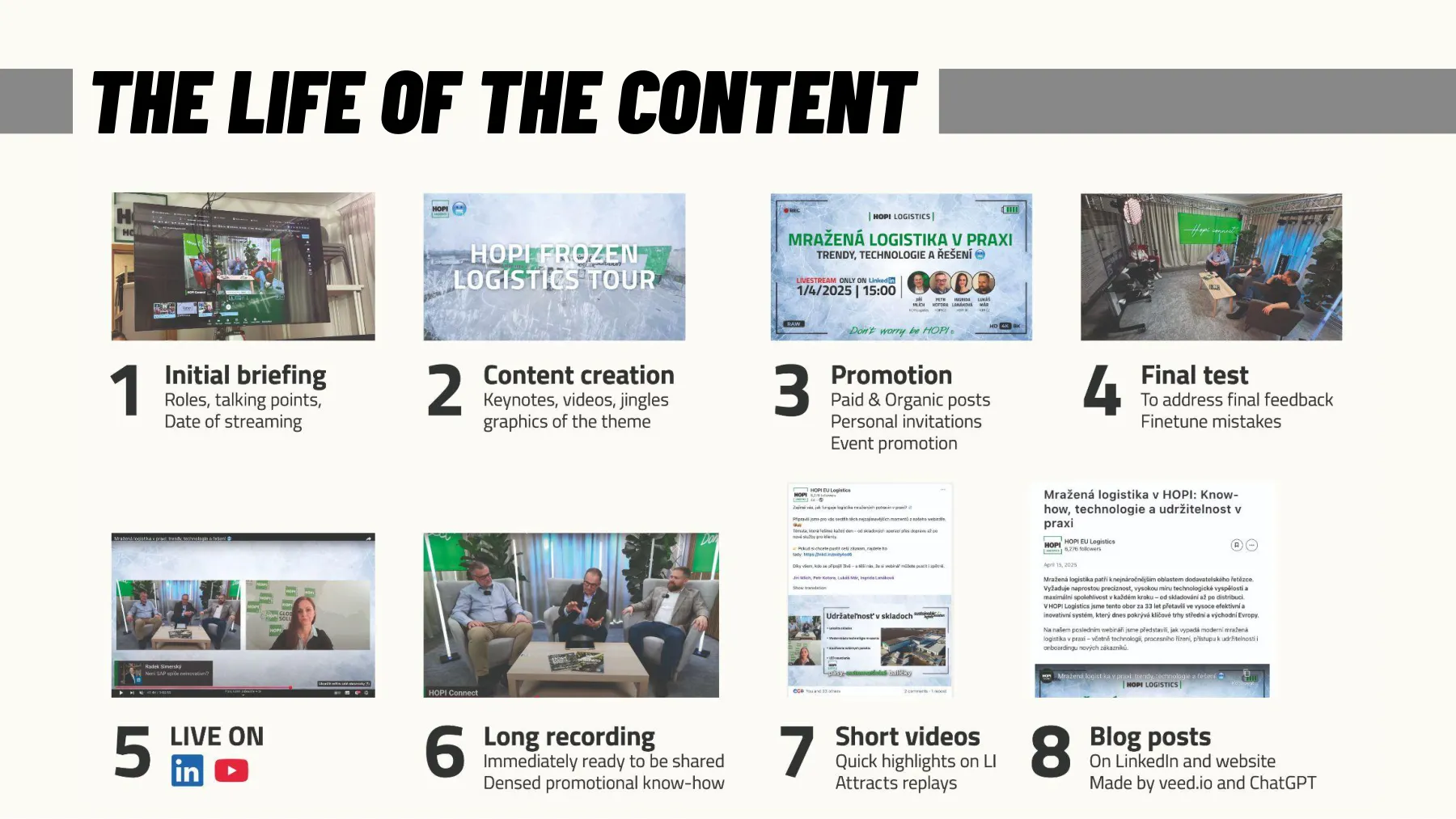
- ·Before: shot list · During: photographer + phone · After: slice it up for a month
- ·Judo tournament: photographer and production in the plan, PR package within half an hour
- ·82% of organizers record their events, 53% offer the recordings only for registration
- ·Media on site: accreditation, press center, mixed zone, photos with credits
An event is the most expensive content you’ll ever make, and in sport that goes double. In the Social Media chapter, we covered three phases (a shot list before, a content team during, slicing it up after), and in the Media chapter, the PR package with the goal of sending it within half an hour of a medal. Here I’ll add what happens on site. A journalist or photographer at a tournament needs four things: accreditation (who can go where), a press center with wired internet, power outlets, and start lists, a mixed zone where athletes walk past the media after their match, and results right away, not after the ceremony.
A judo tournament runs on a fixed rhythm: the draw the day before, elimination rounds on several tatami in the morning, and the final block with the ceremony in the afternoon. That sets the content plan: Czech results throughout the morning (the judo velín sends them to me as push notifications from the International Judo Federation’s API: draw, morning, medals, summary), the athlete’s reaction after the match, photos from the IJF gallery with the photographers credited, and all of it in one email to journalists, with the goal of sending it within half an hour of a medal. The photographer and production are two people with two briefs, and both belong in the event plan.
Post-event content is a product in its own right today: according to Bizzabo, 82% of organizers produce on-demand content, and 53% make at least some of it available only after registration, in exchange for contact details. On the Bizzabo platform, people watch live virtual sessions to 71% of their length on average (46 minutes; this is vendor data, so take it with a grain of salt). When content has a set time and a host, people stay; so slice recordings without a set time into clips. Sort out rights before the event: consent to filming in the registration terms, photos of children only in closed channels, a credit on every photo, licensed music. The brief for the photographer and videographer is in the Production chapter.
- 82%
- of organizers record their events, 53% offer the recordings for registration
- 71%
- of a live virtual session’s length is watched by the average viewer
- 46 min
- average viewing time for a live virtual session
Bizzabo 2026 State of Events
Bizzabo, platform data
Bizzabo, platform data
11Case study: Judo Heroes Camp as a product
Judo Heroes Camp: the camp as a product
- ·Since 2014: 13 editions, 750+ kids · 2027: 65 spots, CZK 12,750, 6 nights in Kácov
- ·Registration: website → confirmation and payment details → velín tracks capacity
- ·2026 ratings: 4.9 out of 5 from 21 responses, 90% plan to come back
- ·Community: T-shirt, daily photo report, national team guests, “we were here last year”
Judo Heroes Camp is a summer camp for young judokas, boys and girls aged roughly 9 to 15, from clubs all over the Czech Republic. It started in 2014 on the initiative of judokas from USK Praha; since then there have been 13 editions, and more than 750 kids have gone through it. It’s organized by Judo Heroes, a registered institute (a Czech nonprofit legal form), registered as a club with the Czech Judo Federation. The 2027 edition runs August 15 to 21 at Sporthotel Kácov: six nights, 65 kids, price CZK 12,750, covering accommodation, full board, training, supervision, the program, and a T-shirt. I lead it on the organizational and promotional side; Radim Knápek, a longtime member of USK Praha, leads the sports side.
The product is the daily schedule, which is why it’s on the website: 7:30 wake-up, 7:45 warm-up, 8:30 breakfast, 9:30 judo, 11:00 games, 13:00 lunch and rest, 15:00 conditioning, 17:00 pool, 19:00 dinner, 20:00 randori, 21:45 lights out. Guests from the Czech national team join the program and demonstrate new techniques and sparring. Registration is a custom form: required are a parent’s contact details and the child’s name, date of birth, club, and T-shirt size; optional are weight, belt, and the question “How did you hear about us?” (the options include AI and “We were here last year”). After submitting, parents get a confirmation and payment instructions, and practical information before the camp.
Community is the part you can’t buy. Ratings for the 2026 edition: 4.9 out of 5 from 21 responses; 100% of parents would recommend the camp, and 90% plan to come back. Asked what their kids liked most, parents most often mention the training, the games, and friends. Every edition has its own T-shirt and group photo in the archive on the website; during the camp, parents get a daily photo report and have a WhatsApp channel with photos and video. So the camp also works as marketing: the registration form lists both “A friend’s recommendation” and “We were here last year” among the referral sources.
- 13
- editions since 2014, more than 750 kids from all over the Czech Republic
- 65
- spots in the 2027 edition, 6 nights, Sporthotel Kácov
- 4.9 / 5
- parents’ rating for 2026 from 21 responses; 100% would recommend, 90% will come back
- CZK 12,750
- price of the 2027 edition, about CZK 1,821 per day with full board
judoheroes.cz
judoheroes.cz
judoheroes.cz/hodnoceni
judoheroes.cz
For discussion
A camp for CZK 12,750 for six nights: what would you say to a parent who thinks it’s expensive? What’s included, what isn’t, and what will they compare it to?
Rabbit holes
- judoheroes.cz ↗ · The camp’s product page: price, daily schedule, registration (in Czech).
- Judo Heroes Camp: parents’ ratings ↗ · Social proof with the sample size stated: 4.9 out of 5 from 21 responses (in Czech).
- Judo Heroes Camp: past editions ↗ · Thirteen editions, T-shirts, group photos, sessions (in Czech).
12Trends: smaller, hybrid, sustainable, data-driven
Events are getting smaller and more targeted
- ·Bizzabo: 63% in person, 33% virtual, 4% hybrid; webinars are growing
- ·Smaller and curated: in Prague, the 50–500 people segment is growing fastest
- ·ISO 20121: the sustainable event standard since London 2012
- ·AI: 21% of attendees look for events via AI; data from registration and badges
Formats. The pandemic didn’t kill virtual events; it just put them in their place. On the Bizzabo platform, 63% of events are in person, 33% virtual, and only 4% hybrid; a hybrid is two events for the price of three. Webinars are growing: 61% of organizers report rising webinar attendance. Takeaway: in-person events for relationships and experience, webinars for knowledge and reach, recordings for everyone else; see Streaming. Smaller and curated. In Prague in 2025, the 50-to-500-delegate segment grew the most, and most events last one day. There aren’t fewer events; they’re just more targeted.
Sustainability stopped being a matter of morality and became a standard. ISO 20121 (Event sustainability management systems, 2012) grew out of the British BS 8901 with input from the London 2012 Olympics sustainability team, and it was used, for example, at the COP21 conference in Paris in 2015; Paris 2024 served twice the share of plant-based food compared with London 2012 and Rio 2016. For a smaller event: no printed program, local food, a shuttle instead of cars, reusable cups, and one sentence in the final accounts on what was measured.
Data and AI. According to Freeman, 21% of attendees and 25% of exhibitors have used AI to find events; even the Judo Heroes Camp registration form lists “AI (ChatGPT, Claude…)” among its referral sources. A model handles transcription and translation. What doesn’t change: people go to events for the people. Technology should remove the line, not replace the handshake. The Trends chapter goes further into automation and tools.
- 4%
- of events on the Bizzabo platform are hybrid (63% in person, 33% virtual)
- 21%
- of attendees have used AI to find events (25% of exhibitors)
- 50–500
- delegates: the event segment that grew most in Prague in 2025
Bizzabo in-platform data
Freeman Trends Report 2026
Prague Convention Bureau
Event formats on the Bizzabo platform
unit: %
- In person63%
- Virtual33%
- Hybrid4%
Virtual events have stayed at a third; hybrid is the exception: two events for the price of three.
data table
| In person | 63% | |
|---|---|---|
| Virtual | 33% | |
| Hybrid | 4% |
Rabbit holes
- Wikipedia: ISO 20121 ↗ · Where the standard came from, who uses it, and what it asks of organizers.
- Freeman Trends Report: The Pre-Event Edition (2026) ↗ · AI in finding events, and when people decide.
13Summary, exercise, and the organizer’s checklist
Summary
- ·Purpose in one sentence, then type, then venue
- ·Revenue streams and break-even before price
- ·Timeline backward, a seven-column run sheet, a risk register
- ·An event is a content factory, and the cheapest attendee is last year’s
An organizer decides in this order: the purpose in one sentence, with a number that will be measured; the event type, based on who pays; revenue streams and break-even, and only then the price; the timeline, backward from D-Day; the run sheet with seven columns; logistics as the attendee’s journey; the risk register with the name of the person who can stop the event; and content planned in advance. Judo Heroes Camp and HOPI Inspires are two sizes of the same thing: same spreadsheet, different number of zeros.
Pair exercise: design an event for your club, school, or company. Purpose in one sentence (for whom · what it does · how we’ll know), type, three revenue streams with an estimate, five run sheet items with durations, and three risks with a plan B and the name of who decides. Eight minutes, then one or two pairs present, and the rest ask just one thing: what will be measured?
- -Purpose in one sentence and three indicators (registrations vs. capacity, turnout, ratings or leads).
- -Revenue streams, break-even, a 10% contingency, a “when it’s paid” column.
- -Run sheet: Time · Dur · Item · Screen · Audio · Source · Who; fixed items and parallel rehearsals.
- -D-Day: one boss, roles with names, a brief, phone numbers on paper, test the sound, wired internet.
- -Risk register: medic, evacuation, rain plan, who can stop the program.
- -Content: shot list, photographer and production with names, consent in the terms, a PR package within half an hour.
For the exam
Terms
- -Event purpose: one sentence in the form for whom · what it does · how we’ll know, written before you pick the venue.
- -Break-even point: the number of participants at which revenue covers costs, that is, fixed costs divided by the difference between the price and the variable cost per person.
- -Dynamic and tiered pricing: dynamic prices change continuously with demand, tiered prices have fixed levels and the more expensive ones go on sale once the cheaper ones sell out; according to the UK’s CMA, the 2024 Oasis sale used tiered pricing that nobody told the people in the queue about.
- -Timeline: planned backward from D-Day, from T-12 months (purpose, date, venue, budget) to D+14 (thank-yous, survey, final accounts).
- -Run sheet: the only document that counts on D-Day, with the columns Time · Dur · Item · Screen · Audio · Source · Who and with sequential, fixed, and parallel items.
- -Risk register: what can happen, probability, impact, plan B, and who decides, and the key is naming in advance who may stop the event.
Numbers
- -84%: of attendees decide to go to an event a month or more before they register (Freeman Trends Report 2026)
- -5 people per m²: the crowd density at which a crush becomes a danger; at 8–10 people per m², the crowd collapses (Wikipedia: Crowd collapses and crushes)
- -1.65 bn: business event attendances worldwide in 2025 (EIC / Oxford Economics 2026)
The final exam is online in the last lesson, in English: 30 questions with three options each from the whole course, and you need 80% to pass. It asks about the terms in the For the exam boxes and how to apply them, much like the quizzes at the end of each lesson.
Final quiz
1A club is running a weekend seminar: fixed costs CZK 60,000, variable costs CZK 500 per participant, price CZK 2,000. How many participants is the break-even point?
- a)24 participants
- b)30 participants
- c)40 participants
answer
c) 40 participantsBreak-even is fixed costs divided by the difference between the price and the variable cost per person: 60,000 ÷ (2,000 − 500) = 40 (section 5).2An organizer sells tickets through a large ticketing network and wants to reach the buyers again next year without paying for reach again. What does it need to set up?
- a)Marketing consent at checkout, a tracking code on the presale page, or its own registration
- b)Nothing, the network hands over all buyers’ emails automatically with the settlement
- c)A higher commission for the network, in exchange for selling it the customer data
answer
a) Marketing consent at checkout, a tracking code on the presale page, or its own registrationThe platform and the organizer are separate data controllers, and the organizer gets a buyer’s email for marketing only with explicit consent; otherwise the platform builds the audience (section 4).3Which purpose for a club open day is written according to the rule from the class?
- a)A big open day in September in our hall, with a DJ, judo demos, and a bouncy castle
- b)For parents of kids aged 6–10: a trial practice and sign-up; we count sign-ups in a month
- c)Raise awareness of the club and show everyone in the area that judo is a great sport for all
answer
b) For parents of kids aged 6–10: a trial practice and sign-up; we count sign-ups in a monthThe purpose is written as one sentence in the form for whom · what it does · how we’ll know, before you pick the venue and the program (section 3).4A morning speaker runs 10 minutes over, and lunch is at 12:30 with a hard time. What happens according to the logic of the run sheet?
- a)Lunch moves back 10 minutes, and the rest of the day with it
- b)The band’s sound check, running in parallel, gets shortened
- c)Lunch stays at 12:30, and something in between gets cut
answer
c) Lunch stays at 12:30, and something in between gets cutLunch is a fixed item with a hard time, so the overrun shows up in red and something in between gets cut, while parallel items don’t move the clock (section 7).5Your risk register for a club festival lists, for each risk, what can happen, probability, impact, and plan B. What does it lack most, according to the class?
- a)The name of the person who may stop the program or evacuate
- b)A cost estimate for each plan B, in crowns and including VAT
- c)A ranking of risks by how often they happened at other events
answer
a) The name of the person who may stop the program or evacuateThe most important column in a risk register is the last one: who has the authority to stop the program, close the entrance, or evacuate, decided in advance (section 9).
For next time
Student presentation at the start of lesson 11 Sponsorship
Pick a partner of your favorite club and show how it uses the partnership beyond the logo on the jersey, or that it doesn’t.
5 minutes, one student or a pair, three slides at most or a phone on the projector
Sources worth clicking
- 1Events Industry Council: Global Economic Significance of Business Events (2026) ↗ · The study with Oxford Economics: 1.65 billion attendances, $1.3 trillion in spending, 24.2 million jobs in 2025.
- 2Bizzabo: event marketing statistics (2026 State of Events) ↗ · Registration conversion, ROI, budgets, formats, and on-demand content in one overview; the source of the formats chart. It’s a platform vendor’s blog, so take the numbers with a grain of salt.
- 3Prague Convention Bureau: Meetings Prague, 2025 statistics (PDF) ↗ · Czech numbers: 5,000+ events, 850,000 delegates, 6th place in ICCA, the growing 50-to-500 segment.
- 4Wikipedia: List of IIHF World Championships by attendance ↗ · Championship attendance by year; the source of the chart. The Czech Republic holds both records.
- 5Wikipedia: Crowd collapses and crushes ↗ · Crowd density in people per m², the mechanics of crushes and collapses, with links to studies.
- 6The Purple Guide (Events Industry Forum) ↗ · The British industry standard for health and safety at events, with a Lite version for small events. The content is behind a subscription (£50 + VAT per year for one user); only the overview is free.
- 7Wikipedia: ISO 20121 ↗ · The standard for sustainable event management: its origins in BS 8901, London 2012, COP21.
- 8Freeman Trends Report: The Pre-Event Edition (2026) ↗ · 3,459 respondents: 84% decide a month or more ahead, 21% look for events via AI.
- 9Judo Heroes Camp ↗ · The camp as a product page: price, daily schedule, ratings with the sample size, registration (in Czech).
- 10HOPI Inspires 2026: attendee website ↗ · Info website for a corporate conference: program, shuttle, tokens, wellness, detour (in Czech).
Rabbit holes
- Wikipedia: Love Parade disaster ↗ · A single entrance and 21 dead: the case that changed crowd planning.
- Wikipedia: Astroworld Festival crowd crush ↗ · Less than an hour from the first reports to the end of the concert: why no one stopped it.
- Wikipedia: The Eras Tour ↗ · $2.077 billion from 149 shows: the economics of the biggest tour ever.
- Wikipedia: 2024 Summer Olympics ↗ · 9.5 million tickets, 45,000 volunteers from 300,000 applications, a budget of around €9 billion.
- Wikipedia: Rock for People ↗ · From 7,000 in the COVID year to 50,000+: a Czech festival’s growth (in Czech).
- Eventbrite: organizer pricing ↗ · How a ticket fee breaks down: percentage, fixed amount, payment processing (US pricing).
- UFI: 37th Global Exhibition Barometer (July 2026) ↗ · The mood in the trade fair industry: 466 respondents from 59 countries.
- Wikipedia: 2020 European Judo Championships ↗ · The European Championships at O2 arena in the middle of COVID: 40 countries, 345 athletes.